
Multi-Cloud Application Development Strategies for Global Enterprises
Introduction
As businesses expand across regions and markets, relying on a single cloud provider is becoming increasingly limiting. Global enterprises need infrastructure that can support diverse regulatory requirements, ensure business continuity, optimize performance, and avoid vendor lock-in.
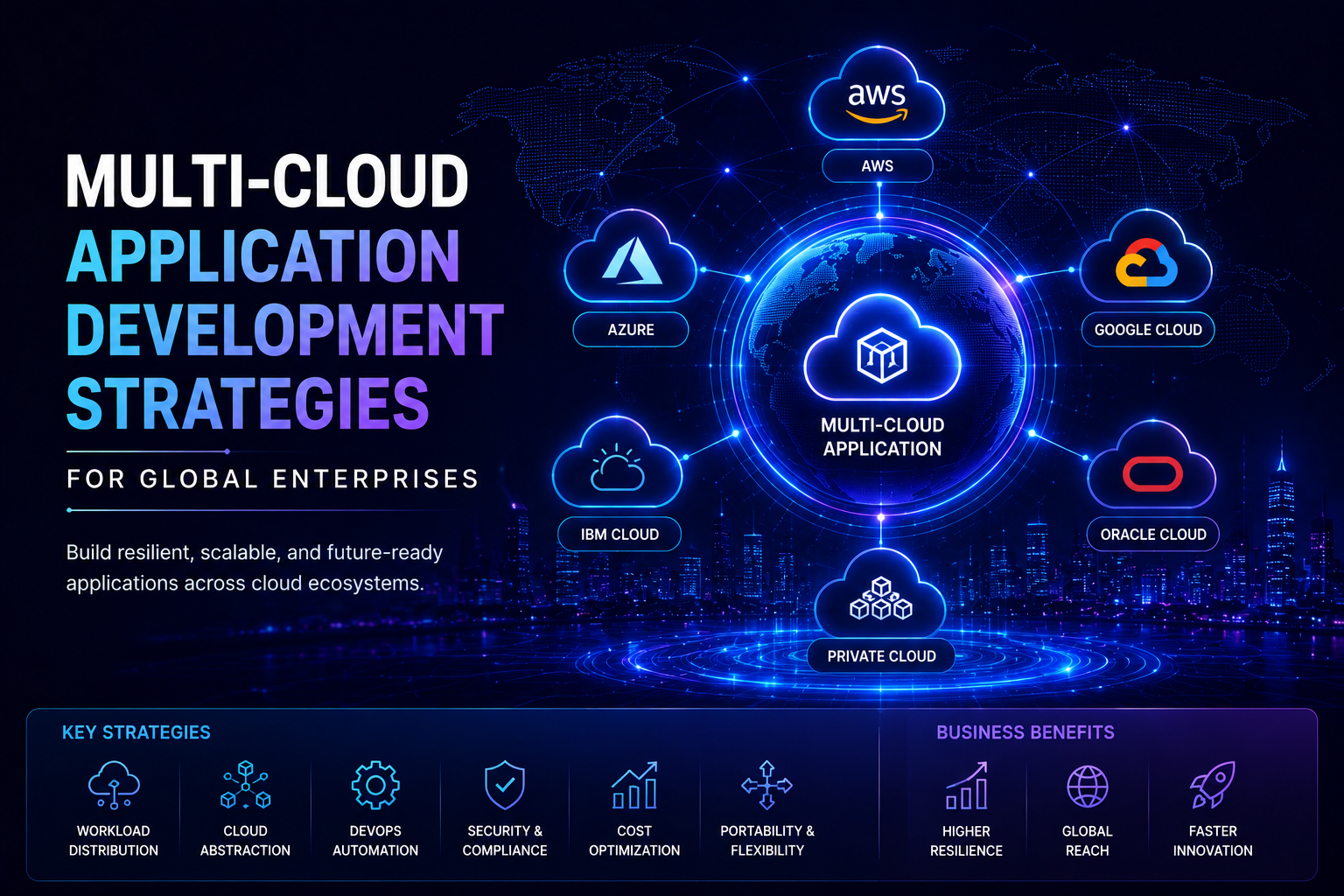
This is why multi-cloud application development has emerged as a strategic priority in 2026. By leveraging multiple cloud providers such as AWS, Microsoft Azure, Google Cloud, and specialized regional cloud platforms, organizations can build highly resilient, scalable, and globally distributed applications.
However, successful multi-cloud adoption requires more than deploying workloads across different clouds. It demands a well-planned architecture, standardized development practices, robust integration strategies, and strong governance.
At APISDOR, we help enterprises design and implement multi-cloud application architectures that deliver flexibility, performance, and operational resilience at a global scale.
What Is Multi-Cloud Application Development?
Multi-cloud application development refers to designing, building, and deploying applications that operate across multiple cloud environments.
These environments may include:
- Amazon Web Services (AWS)
- Microsoft Azure
- Google Cloud Platform (GCP)
- Oracle Cloud Infrastructure (OCI)
- Regional or industry-specific cloud providers
The objective is to leverage the strengths of multiple platforms while minimizing dependency on a single vendor.
Why Global Enterprises Are Embracing Multi-Cloud
1. Avoiding Vendor Lock-In
Vendor lock-in can limit:
- Technology flexibility
- Cost optimization
- Innovation opportunities
A multi-cloud strategy allows organizations to select the best services from different providers while maintaining control over their technology roadmap.
2. Enhancing Business Continuity
Downtime can be costly for global enterprises.
Multi-cloud architectures improve:
- Disaster recovery
- Failover capabilities
- Application availability
By distributing workloads across providers, organizations reduce the risk of service disruptions.
3. Meeting Regional Compliance Requirements
Different countries have varying regulations regarding:
- Data residency
- Privacy
- Security
Multi-cloud deployments enable enterprises to host data and applications closer to users while complying with local regulations.
4. Optimizing Performance Globally
Global applications must deliver low-latency experiences.
Multi-cloud infrastructure helps:
- Reduce response times
- Improve application performance
- Support geographically distributed users
5. Accessing Best-of-Breed Cloud Services
Each cloud provider offers unique strengths.
For example:
- Advanced AI services
- Specialized analytics platforms
- Industry-specific solutions
Multi-cloud enables organizations to take advantage of the best capabilities available.
Core Principles of Multi-Cloud Application Development
Cloud-Agnostic Design
Applications should avoid excessive dependency on provider-specific services whenever possible.
Benefits include:
- Easier portability
- Greater flexibility
- Reduced migration complexity
API-First Architecture
APIs play a crucial role in connecting:
- Cloud services
- Enterprise applications
- Data systems
- Partner ecosystems
API-first design simplifies integration across cloud environments.
Containerization
Containers provide:
- Consistent deployments
- Portability across clouds
- Simplified application management
Containerized applications can run on virtually any cloud platform.
Kubernetes Orchestration
Kubernetes has become the standard for multi-cloud deployment.
It enables:
- Workload portability
- Automated scaling
- Consistent operations across clouds
Infrastructure as Code (IaC)
IaC helps organizations:
- Standardize deployments
- Automate provisioning
- Maintain consistency across environments
This is essential for large-scale multi-cloud operations.
Building a Multi-Cloud Architecture
Application Layer
Modern applications should be:
- Modular
- Cloud-native
- API-driven
Microservices architectures are often preferred because they support independent scaling and deployment.
Integration Layer
The integration layer connects:
- Enterprise systems
- Cloud services
- APIs
- Data platforms
This layer enables seamless communication across environments.
Data Layer
Data strategies should address:
- Replication
- Synchronization
- Governance
- Security
Organizations must ensure data consistency across multiple cloud providers.
Security Layer
A centralized security framework should include:
- Identity and Access Management (IAM)
- Encryption
- API security
- Threat monitoring
Security policies should remain consistent across clouds.
Observability Layer
Organizations need visibility into:
- Application performance
- Infrastructure health
- Security events
- User experience
Centralized monitoring is critical for operational success.
Multi-Cloud Development Best Practices
Standardize Development Processes
Establish:
- Common coding standards
- CI/CD pipelines
- Deployment practices
Consistency reduces operational complexity.
Use Open Technologies
Favor:
- Kubernetes
- Containers
- Open APIs
- Open-source tools
This improves portability and flexibility.
Implement Centralized Governance
Governance should cover:
- Security policies
- Compliance requirements
- Resource management
- Cost optimization
Automate Infrastructure Management
Automation helps:
- Reduce human errors
- Accelerate deployments
- Improve reliability
Infrastructure as Code plays a key role here.
Monitor Costs Continuously
Multi-cloud environments can increase spending if not managed carefully.
Organizations should:
- Track usage
- Optimize resources
- Automate cost controls
Enterprise Use Cases
Global SaaS Platforms
Multi-cloud architectures support:
- Regional deployments
- Low-latency user experiences
- Business continuity
Financial Services
Organizations use multi-cloud to:
- Meet compliance requirements
- Improve disaster recovery
- Support mission-critical applications
Healthcare Systems
Multi-cloud deployments help:
- Protect sensitive data
- Meet regulatory standards
- Improve service availability
Retail and eCommerce
Retailers leverage multi-cloud to:
- Handle seasonal demand spikes
- Improve customer experiences globally
- Enhance supply chain visibility
AI and Data Platforms
Multi-cloud environments allow organizations to:
- Access specialized AI services
- Optimize data processing workloads
- Improve analytics performance
Common Challenges
- Complexity Management
Operating across multiple providers increases architectural complexity. - Security Consistency
Organizations must ensure uniform security controls across clouds. - Data Synchronization
Maintaining consistent data across environments can be challenging. - Skill Gaps
Multi-cloud environments require expertise across multiple platforms.
Benefits of Multi-Cloud Application Development
| Benefit | Business Impact |
|---|---|
| Flexibility | Reduced vendor dependency |
| Resilience | Improved availability and disaster recovery |
| Performance | Better global user experiences |
| Compliance | Support for regional regulations |
| Innovation | Access to best-of-breed cloud services |
| Scalability | Supports global growth initiatives |
How APISDOR Helps Enterprises Succeed with Multi-Cloud
At APISDOR, we help organizations:
- Design multi-cloud architectures
- Build cloud-native applications
- Implement API-first integration strategies
- Deploy Kubernetes and container platforms
- Create secure and compliant cloud ecosystems
- Optimize performance and operational efficiency
Our approach ensures enterprises can fully leverage multi-cloud technologies while maintaining scalability, governance, and business agility.
FAQs: Multi-Cloud Application Development
Q1. What is the difference between multi-cloud and hybrid cloud?
A: Hybrid cloud combines private and public cloud environments, while multi-cloud uses multiple public cloud providers.
Q2. Is multi-cloud suitable for all enterprises?
A: Most large enterprises benefit from multi-cloud strategies, especially those operating globally or requiring high resilience.
Q3. Does multi-cloud increase costs?
A: It can, but proper governance and cost optimization strategies help maximize value while controlling expenses.
Q4. Why is Kubernetes important for multi-cloud?
A: Kubernetes provides a consistent platform for deploying and managing applications across different cloud providers.
Q5. How can enterprises avoid vendor lock-in?
A: By adopting cloud-agnostic architectures, APIs, containers, and open technologies that support portability.
Conclusion
Multi-cloud application development is becoming a cornerstone of enterprise digital strategy in 2026. By leveraging multiple cloud providers, organizations can improve resilience, enhance performance, meet compliance requirements, and accelerate innovation.
The key to success lies in building cloud-native, API-first, and container-based architectures that remain portable, scalable, and secure across environments.
With APISDOR as your technology partner, you can confidently build a multi-cloud enterprise.


