

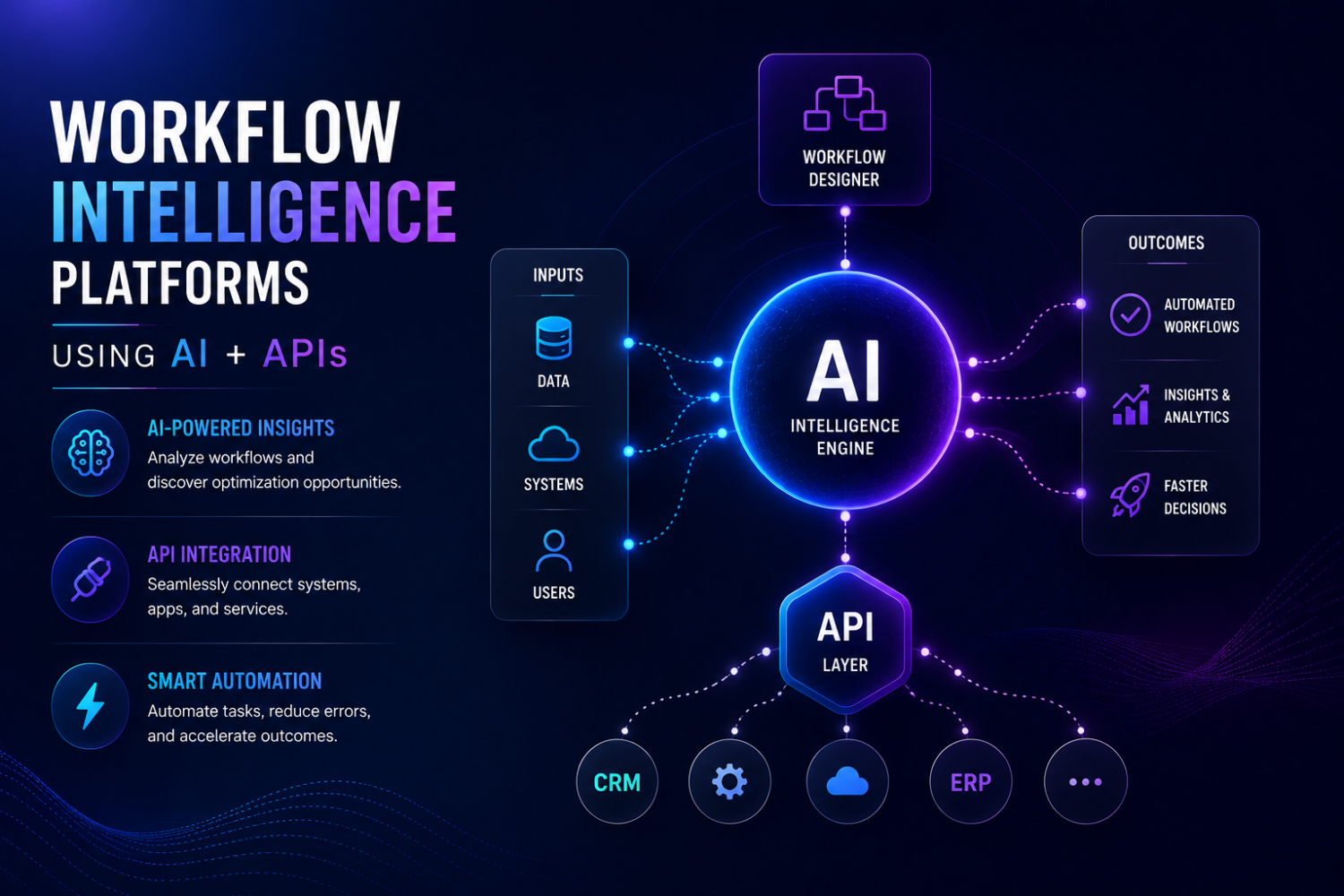
Workflow Intelligence Platforms Using AI + APIs
Introduction Modern enterprises manage thousands of workflows every day—from customer onboarding and financial approvals to IT operations and supply chain management. While traditional workflow automation has helped streamline repetitive tasks, it often relies on predefined rules that cannot adapt to changing business conditions. In 2026, organizations are moving beyond conventional automation by adopting Workflow Intelligence […]
Read More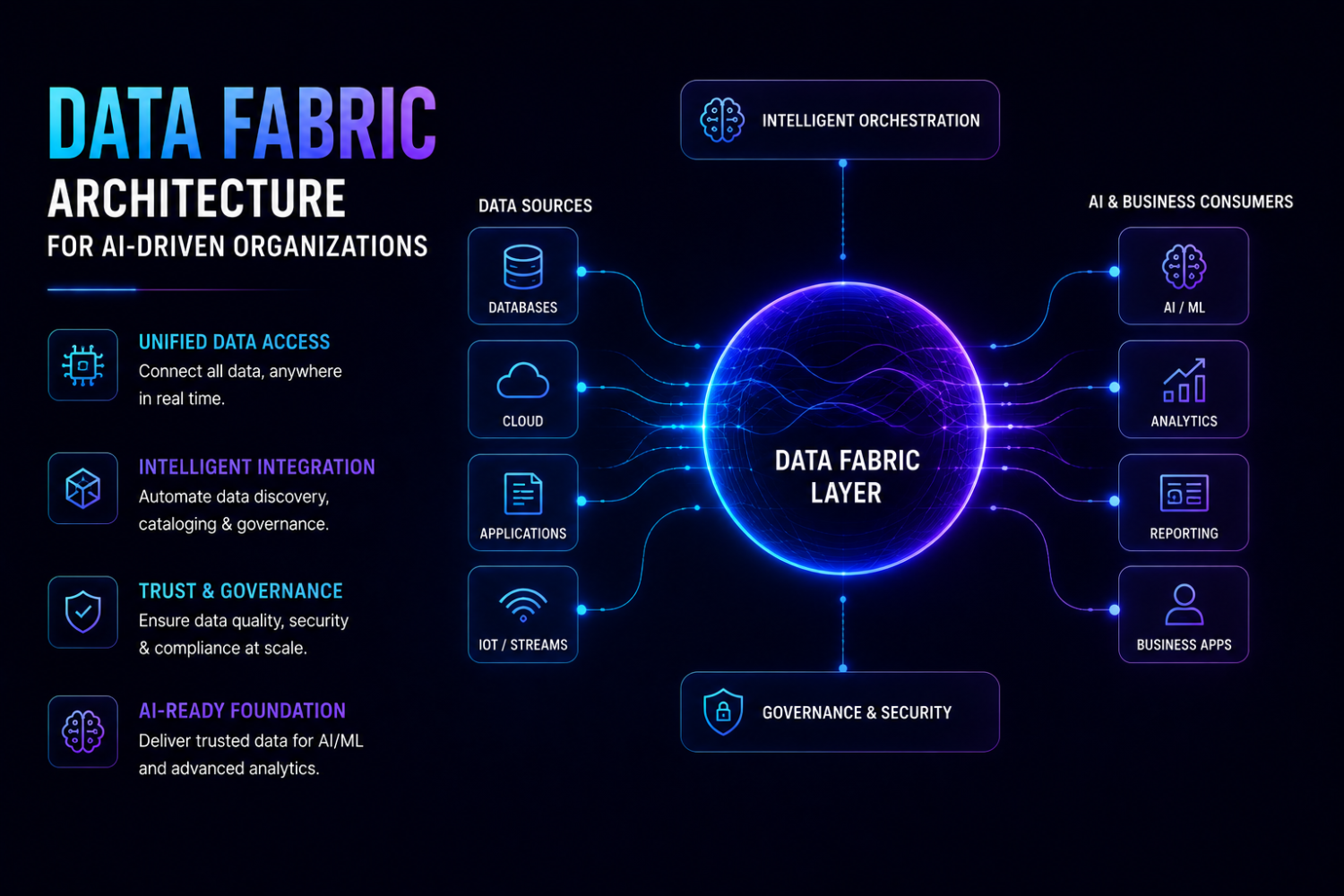
Data Fabric Architecture for AI-Driven Organizations
Introduction Artificial Intelligence (AI) is transforming how organizations operate, compete, and innovate. However, even the most advanced AI models are only as effective as the data they access. Many enterprises still struggle with fragmented data spread across cloud platforms, on-premises systems, SaaS applications, IoT devices, and legacy databases. These data silos limit the accuracy and […]
Read More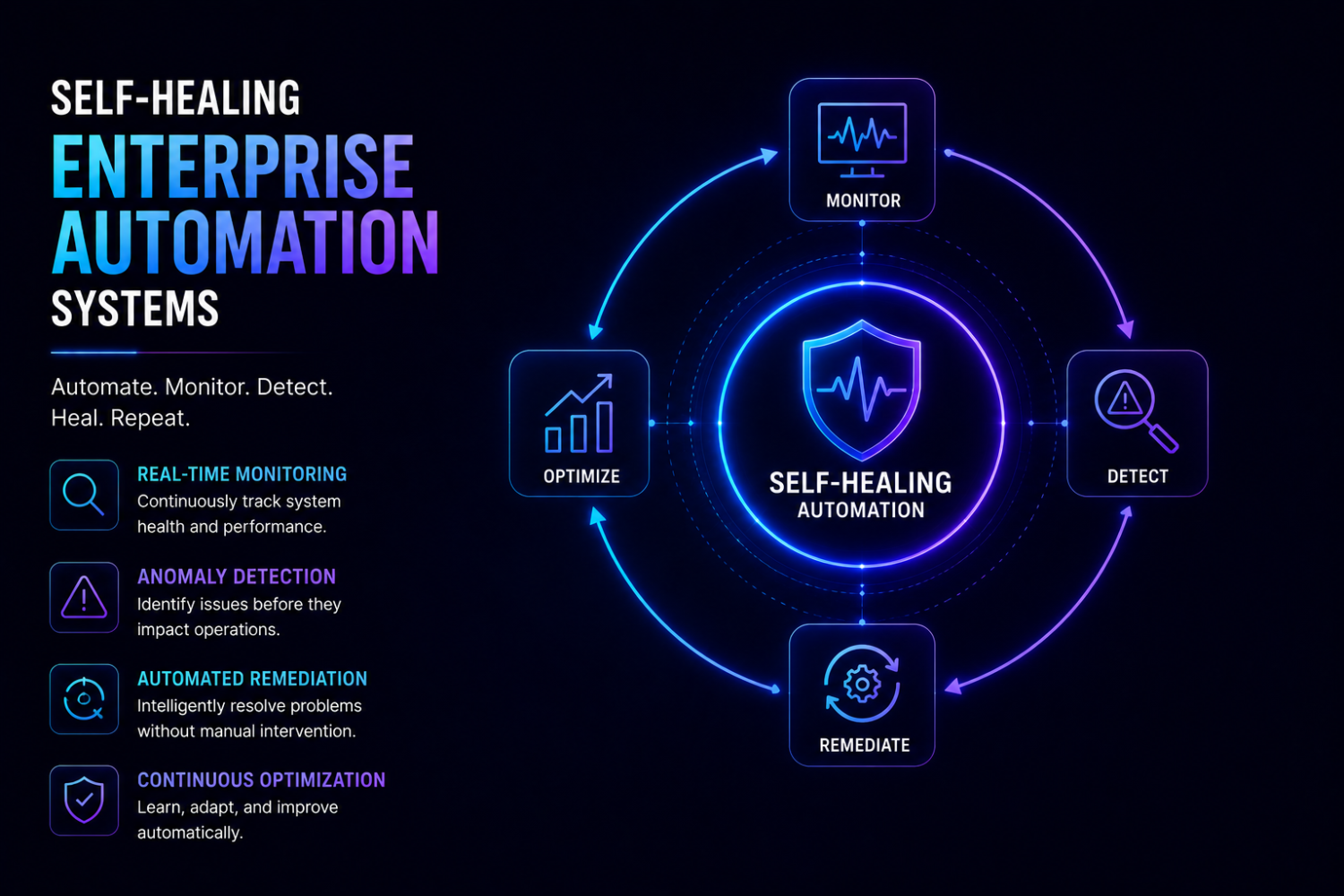
Self-Healing Enterprise Automation Systems
AI identifies unusual system behavior in real time. Introduction Modern enterprises rely on increasingly complex digital ecosystems that span cloud platforms, on-premises infrastructure, APIs, microservices, enterprise applications, AI models, and connected devices. While automation has significantly improved operational efficiency, traditional automation still depends heavily on human intervention whenever failures, unexpected events, or system anomalies occur. […]
Read More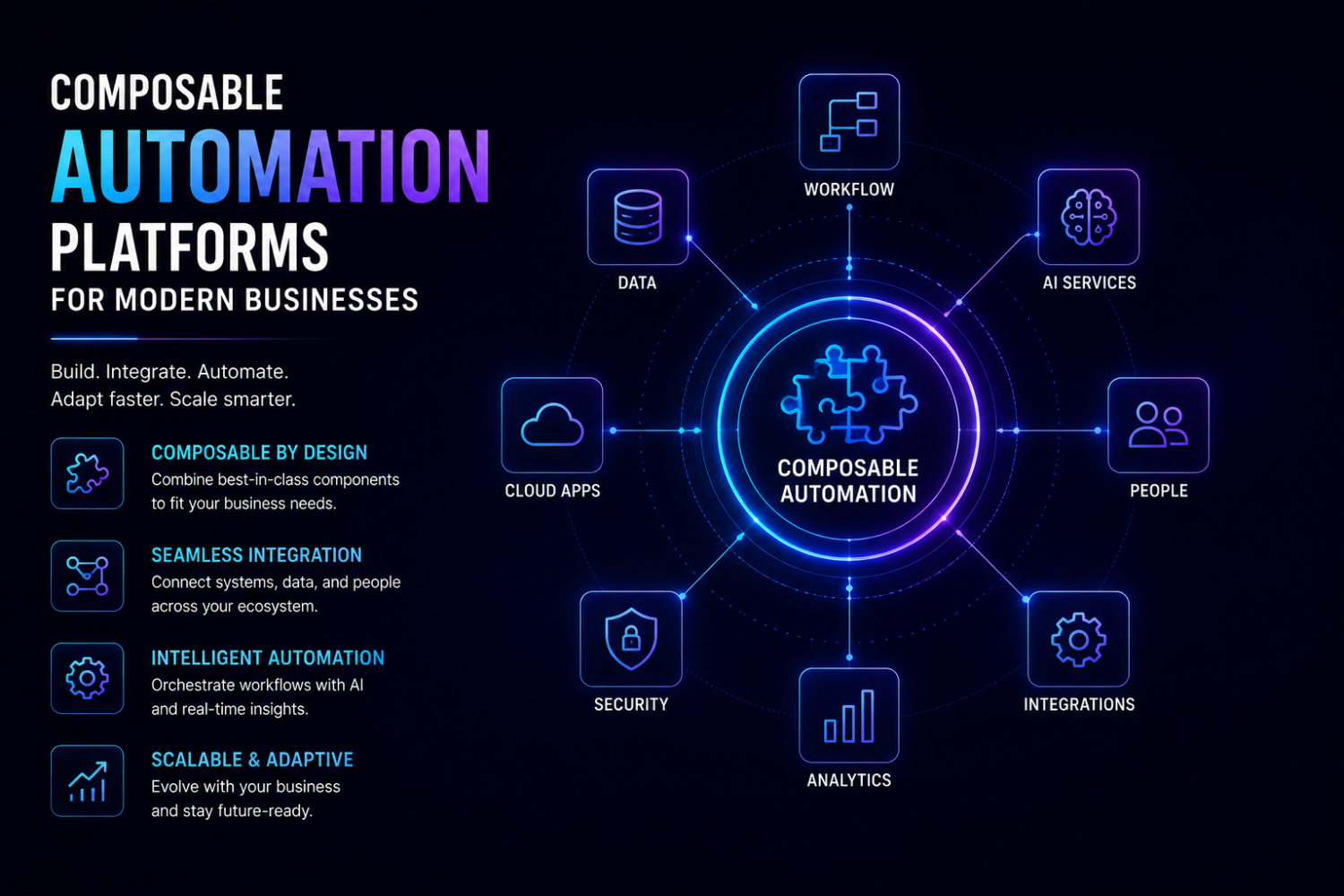
Composable Automation Platforms for Modern Businesses
Introduction Businesses today operate in an increasingly complex digital environment where applications, cloud services, APIs, AI systems, and data platforms must work together seamlessly. Traditional automation solutions often struggle to keep pace with evolving business requirements because they rely on rigid workflows and tightly coupled integrations. To overcome these challenges, enterprises are embracing Composable Automation […]
Read More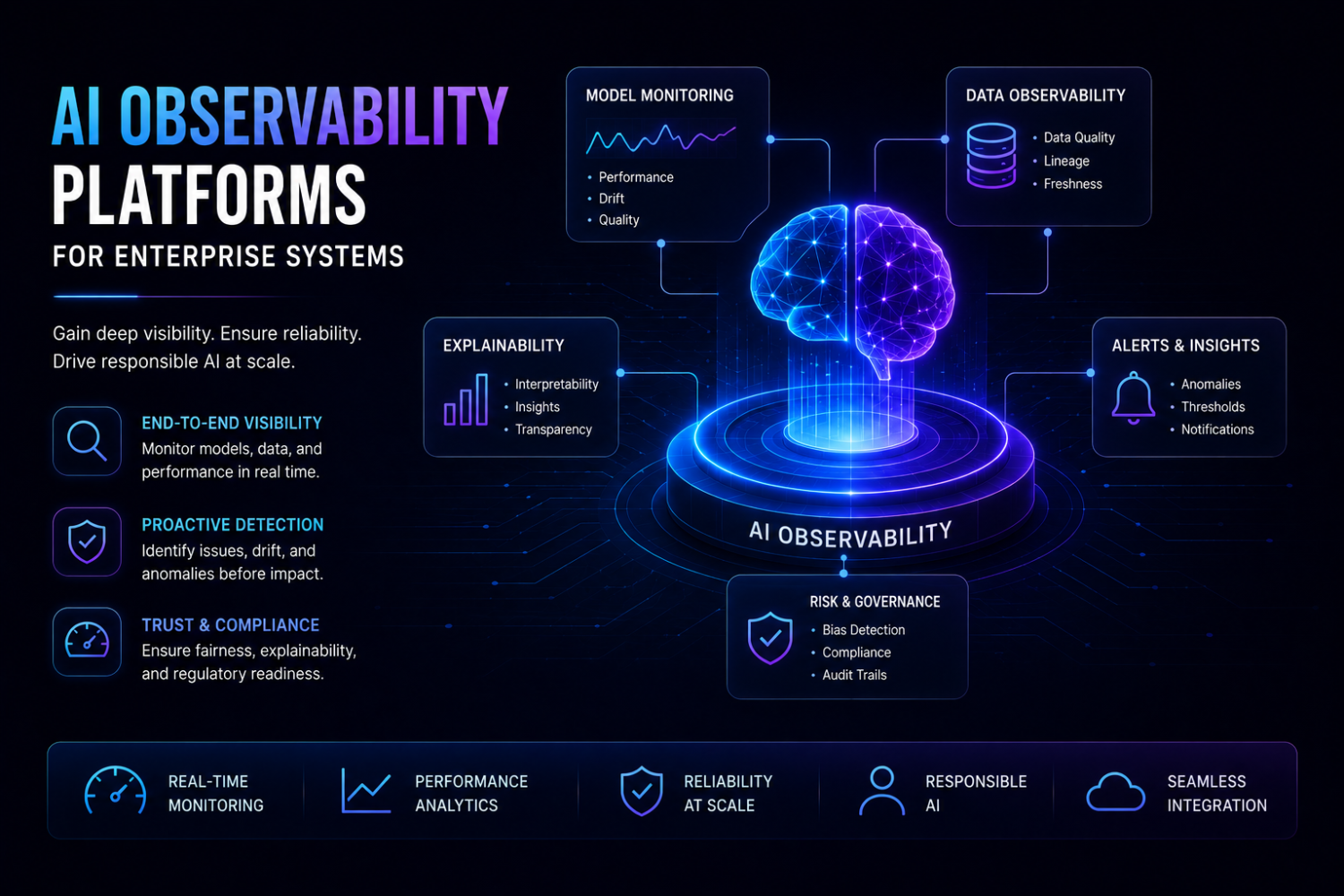
AI Observability Platforms for Enterprise Systems
Introduction As enterprises accelerate AI adoption, maintaining visibility into AI systems has become just as important as building them. Organizations are deploying Large Language Models (LLMs), AI agents, predictive analytics, computer vision, and machine learning models across customer service, finance, healthcare, cybersecurity, and operations. However, without proper monitoring, AI systems can produce inaccurate outputs, experience […]
Read More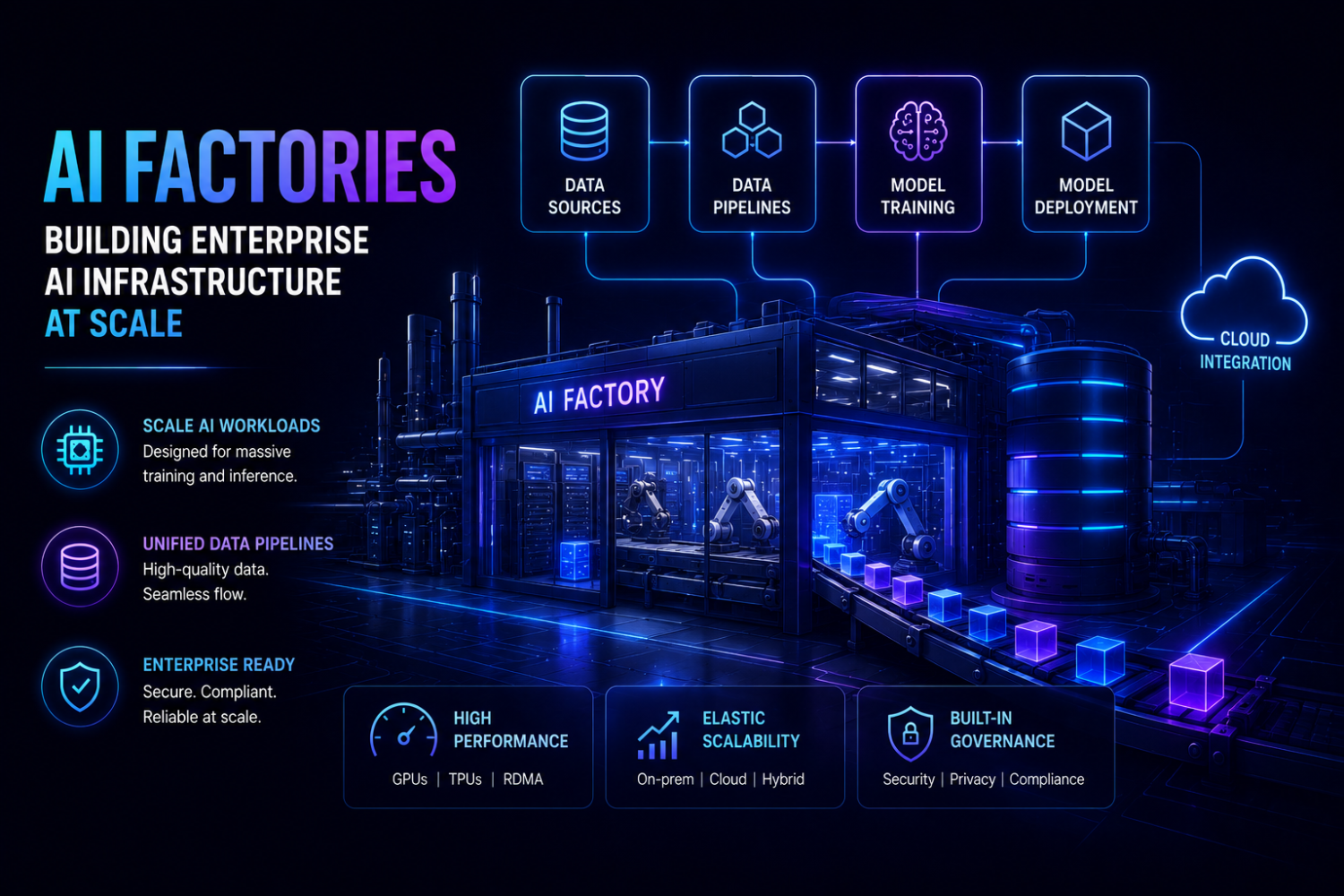
AI Factories: Building Enterprise AI Infrastructure at Scale
Introduction Artificial Intelligence has evolved from experimental pilots into a core driver of enterprise innovation. Organizations are deploying AI across customer service, software development, finance, cybersecurity, healthcare, supply chain operations, and business intelligence. As AI adoption accelerates, businesses need more than powerful models—they need a scalable infrastructure capable of developing, deploying, managing, and governing AI […]
Read MoreFollow Us


