
The Learning Rate of a Company as a Vital Metric for AI Adaptation and ROI
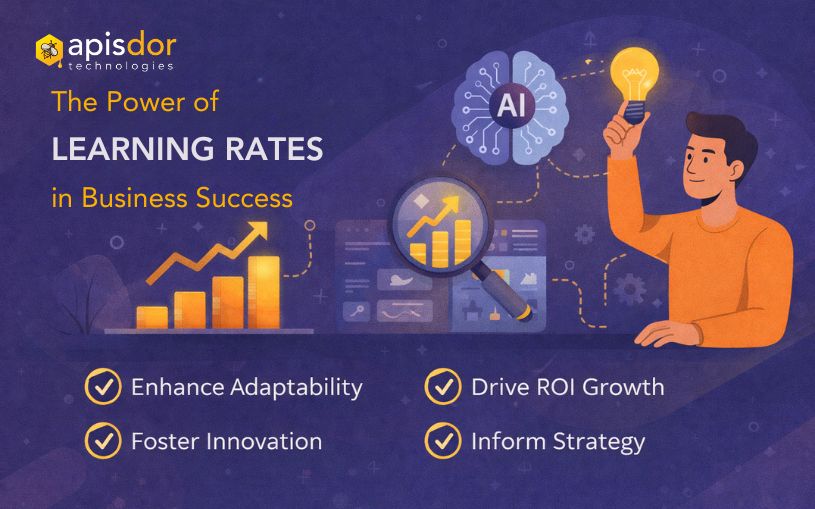
In an age where technology spins faster than a whirlwind, understanding how swiftly a company can learn and adapt is more important than ever. This ability, known as a company’s learning rate, acts like a compass in the chaotic seas of the AI-driven market, helping businesses navigate changes with ease. By grasping and improving their learning rates, companies can not only survive but thrive, significantly bolstering their return on investment (ROI).
This blog post will take you on a journey through the concept of the learning rate, its significance in an AI-centric world, and the ways businesses can harness it to become more flexible and profitable. We’ll explore how learning rates correlate with organizational change, the influence of data on measuring this adaptability, and practical strategies for enhancement. By the end of our exploration, you’ll see clearly why learning rates hold such weight and how to implement effective tactics.
Understanding the Learning Rate
Picture a company’s learning rate as its ability to soak up new information like a sponge, quickly reshaping itself to survive in a river of constant change. This idea is critical, particularly in the context of rising technologies and AI innovations. Businesses that excel in their learning rates demonstrate nimbleness in shifting their strategies based on fresh insights, keeping pace with market movements.
The learning rate is not merely an academic metric but a vital component influencing a company’s responsiveness and adaptability.
However, many organizations stumble over their learning rates due to rigid hierarchies and resistance to change. According to McKinsey, businesses that adapt more readily see 22% greater earnings than their less flexible rivals. Clearly, a strong learning rate can directly impact profitability.
The Role of AI in Enhancing Learning Rates
Artificial Intelligence serves as a turbocharger for boosting a company’s learning rate. With the help of AI-driven analytics, firms can sift through mountains of data at lightning speed, uncovering insights that guide informed decision-making. Utilizing AI tools, businesses can analyze market trends, customer behavior, and internal performance metrics systematically.
By implementing AI, companies can gain a deeper understanding of their environments, which ultimately enriches their learning processes. For example, AI algorithms can continuously improve by learning from past data, much like how businesses should refine their learning strategies.
Measuring the Learning Rate Effectively
To fine-tune their learning rates, companies need to set up clear metrics and assessment procedures. Important indicators may encompass employee adaptability, engagement levels, and how quickly information is processed. Tools such as pulse surveys and feedback loops can deliver real-time insights into learning efficiency, enabling businesses to tweak their tactics as needed.
Moreover, keeping a close eye on metrics like the pace of implementation for new initiatives can offer clear insights into how rapidly staff adapt to changes based on new information.
Strategies to Improve Learning Rates
Businesses eager to boost their learning rates can employ various strategies:
- Foster a culture of openness that encourages team members to share insights and feedback freely.
- Invest in employee training focused on innovation, as noted by Forbes, to elevate overall learning rates.
- Embrace failure as a stepping stone, relieving the fear associated with risk-taking.
Additionally, forming cross-functional teams can bring diverse viewpoints into the mix. Utilizing AI tools for monitoring performance and refining training can also be beneficial. Building a feedback-driven culture can further enhance adaptability.
Leveraging Data for Continuous Improvement
The learning journey is ongoing, requiring an active collection and analysis of data. Companies should develop a comprehensive data strategy that integrates different departments and functions, ensuring that insights are relevant and shared across the organization. This interconnectedness leads to improved learning rates and fosters an innovative atmosphere.
Comprehensive data transparency across the board is critical in driving effective learning.
Conclusion
In a fast-paced business world full of twists and turns, learning rates have transformed from mere metrics into essential drivers of adaptability and ROI. Companies that make optimizing their learning rates a priority are likely to reap significant benefits over their competition. The dynamic interplay of AI, data-driven decision-making, and employee engagement creates fertile ground for learning and growth.
Ultimately, by embracing learning as a core organizational strategy, businesses can nurture resilience, encourage adaptability, and significantly enhance their overall performance.
Consider the learning rate not only as a measure but as a pivotal element of corporate strategy.
FAQ
Q1: What is a company’s learning rate?
A: A company’s learning rate gauges its ability to adapt swiftly to new information and market changes, encapsulating how effectively it can learn from data to bolster decision-making.
Q2: How can AI improve a company’s learning rate?
A: AI can handle large volumes of data rapidly, delivering real-time insights that enable organizations to adjust their strategies effectively, thus enhancing overall adaptability.
Q3: What metrics are used to measure the learning rate?
A: Key metrics include employee adaptability, engagement levels, speed of information processing, and the rate at which new strategies and initiatives are implemented.
Q4: Why is a learning culture important?
A: A learning culture promotes openness, innovation, and ongoing improvement, allowing employees to share insights and adapt strategies swiftly, which positively affects performance and ROI.


