
How AI + n8n Workflows Are Powering Next-Gen UVI Security Platforms
Introduction
Cybersecurity platforms are evolving rapidly as organizations face increasingly sophisticated threats, expanding attack surfaces, and growing volumes of vulnerability data. Traditional security operations often struggle to keep up with the scale and complexity of modern enterprise environments.
To address these challenges, many organizations are adopting AI-powered automation combined with flexible workflow orchestration platforms like n8n. This combination enables next-generation Unified Vulnerability Intelligence (UVI) security platforms capable of automating vulnerability analysis, prioritizing threats, and accelerating incident response.
At APISDOR, we help enterprises design AI-driven security workflows using n8n automation and API-based integrations, enabling smarter and more proactive vulnerability management.
What Is Unified Vulnerability Intelligence (UVI)?
Unified Vulnerability Intelligence (UVI) is a modern approach to vulnerability management that consolidates data from multiple sources into a unified security intelligence layer.
Typical UVI data sources include:
- Vulnerability databases such as CVE repositories
- Security scanning tools
- Threat intelligence feeds
- Exploit databases
- Vendor security advisories
- Cloud security platforms
UVI platforms provide organizations with a comprehensive view of security risks across their infrastructure and applications.
Why Traditional Vulnerability Management Falls Short
Many enterprises still rely on manual processes or disconnected tools for vulnerability management. This creates several challenges:
- Security alerts without proper context
- Delayed vulnerability prioritization
- Manual triage and investigation
- Slow remediation workflows
- Fragmented security visibility
The result is longer vulnerability exposure windows and increased risk.
Next-generation platforms solve these challenges using AI and workflow automation.
Role of AI in Modern UVI Platforms
Artificial Intelligence enables security platforms to move from reactive detection to intelligent threat prioritization and prediction.
AI Capabilities in UVI Platforms
Threat Prioritization
AI models analyze vulnerability data, exploit trends, and system exposure to identify which vulnerabilities pose the highest risk.
Anomaly Detection
Machine learning identifies abnormal patterns in system activity that may indicate exploitation attempts.
Predictive Risk Scoring
AI predicts which vulnerabilities are likely to be exploited based on historical threat data.
Automated Security Insights
Natural language models summarize vulnerability reports and recommend remediation actions.
AI turns large volumes of vulnerability data into actionable intelligence for security teams.
Why n8n Is Ideal for Security Workflow Automation
n8n is a powerful open-source workflow automation platform that connects systems, APIs, and data sources.
In cybersecurity environments, n8n acts as the orchestration engine that automates security operations.
Key advantages include:
- API-first architecture
- Flexible workflow orchestration
- Self-hosted deployment for security compliance
- Custom logic using JavaScript
- Integration with hundreds of tools and platforms
This flexibility makes n8n highly suitable for enterprise security automation.
How AI + n8n Power Next-Gen UVI Platforms
1. Automated Vulnerability Intelligence Aggregation
n8n workflows can automatically collect vulnerability data from multiple sources, such as:
- CVE feeds
- Threat intelligence platforms
- Cloud security scanners
- Security APIs
AI models then analyze the aggregated data to detect patterns and prioritize threats.
2. Intelligent Vulnerability Prioritization
Once vulnerabilities are detected, AI engines evaluate them using factors such as:
- CVSS scores
- Exploit availability
- System exposure
- Asset criticality
n8n workflows then route prioritized vulnerabilities to the appropriate teams or remediation systems.
3. Automated Security Incident Workflows
When high-risk vulnerabilities are detected, n8n can trigger automated actions such as:
- Creating security tickets
- Alerting SOC teams
- Triggering patch management workflows
- Updating security dashboards
This dramatically reduces response times.
4. Integration with Enterprise Security Platforms
n8n workflows integrate seamlessly with:
- SIEM platforms
- SOAR systems
- vulnerability management tools
- ticketing systems like Jira or ServiceNow
- cloud security tools
These integrations create end-to-end automated security pipelines.
5. AI-Powered Reporting and Security Insights
AI models can generate:
- Vulnerability summaries
- Risk analysis reports
- remediation recommendations
n8n workflows automatically distribute these reports to security teams and executives.
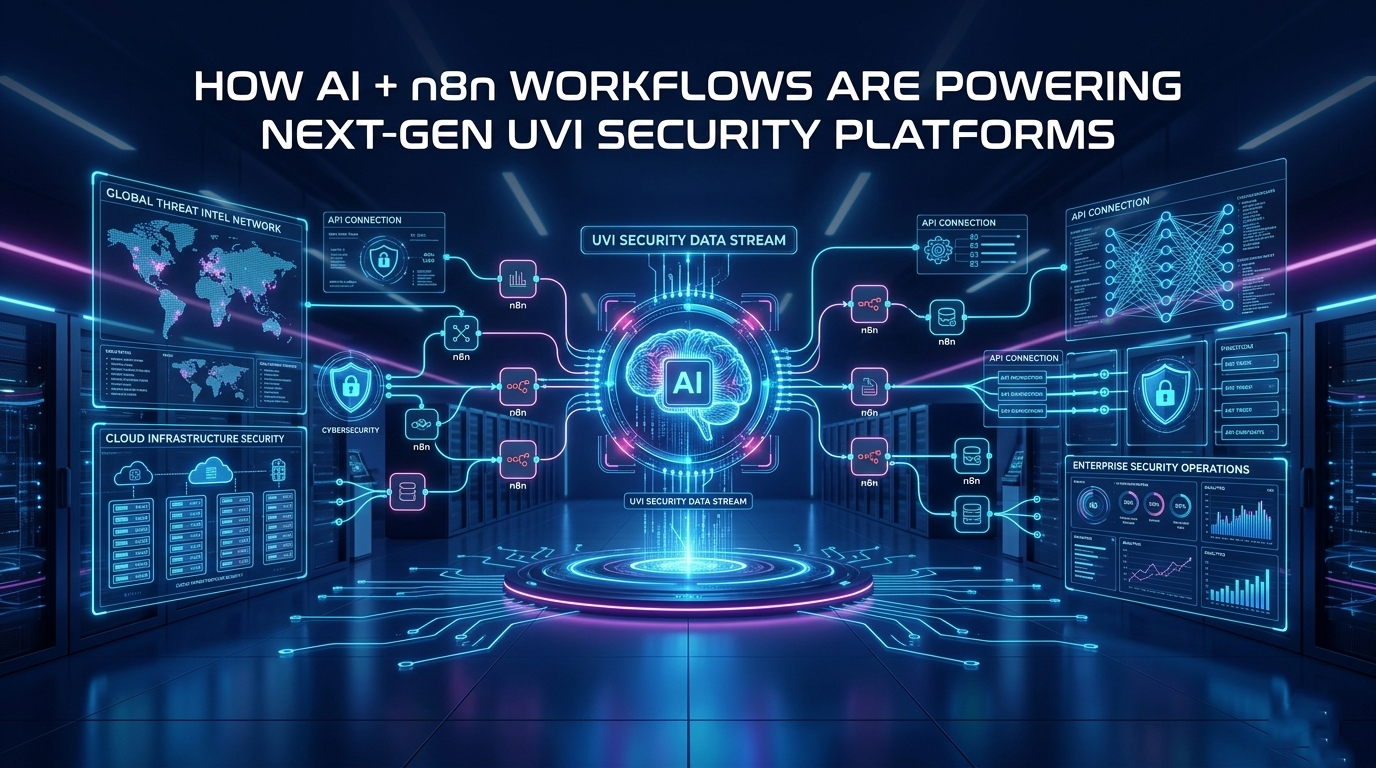
Architecture of AI + n8n UVI Platforms
A typical architecture includes:
- Vulnerability data sources (CVE feeds, scanners, threat intelligence)
- n8n workflow orchestration layer
- AI analysis engines (ML models or LLM APIs)
- Security platforms (SIEM, SOAR, ticketing systems)
- dashboards and monitoring systems
This architecture enables real-time vulnerability intelligence and automated security operations.
Enterprise Benefits
| Benefit | Impact |
|---|---|
| Faster Threat Detection | Real-time vulnerability analysis |
| Automated Security Operations | Reduced manual triage |
| Improved Risk Prioritization | Focus on critical vulnerabilities |
| Better Security Visibility | Unified intelligence across platforms |
| Faster Remediation | Reduced exposure to exploits |
Together, AI and workflow automation create smarter, faster, and more resilient security operations.
Best Practices for Implementing AI + n8n Security Workflows
- Use API-first integration strategies
- Implement strong authentication and access controls
- Deploy n8n in secure environments (self-hosted or private cloud)
- Combine AI analysis with human oversight
- Continuously monitor workflow performance and security events
Security automation should always balance speed, accuracy, and governance.
How APISDOR Helps Build AI-Powered UVI Platforms
At APISDOR, we specialize in designing and implementing AI-powered enterprise automation systems.
Our services include:
- AI-powered vulnerability intelligence solutions
- n8n workflow architecture and deployment
- API-based security integrations
- security automation pipelines
- enterprise-scale monitoring and governance
We help organizations build next-generation cybersecurity platforms powered by automation and intelligence.
FAQs: AI + n8n for UVI Security Platforms
Q1. What is UVI in cybersecurity?
A: UVI stands for Unified Vulnerability Intelligence, which consolidates vulnerability data from multiple sources to provide comprehensive risk insights.
Q2. Why combine AI with workflow automation?
A: AI analyzes and prioritizes threats, while workflow automation executes actions across systems.
Q3. Is n8n secure for enterprise security workflows?
A: Yes. When self-hosted with proper access control and monitoring, n8n can meet enterprise security requirements.
Q4. Can AI replace human security analysts?
A: No. AI enhances analyst capabilities by automating repetitive tasks and providing insights.
Q5. How quickly can organizations implement AI-driven security automation?
A: Many enterprises can deploy initial workflows within weeks and expand gradually.
Conclusion
As cybersecurity threats continue to grow in complexity, organizations need smarter tools to manage vulnerability intelligence and security operations.
By combining AI-driven threat analysis with flexible workflow orchestration using n8n, enterprises can build next-generation UVI security platforms that automate vulnerability management, accelerate response times, and strengthen overall security posture.
With APISDOR as your technology partner, organizations can transform traditional security operations into intelligent, automated defense systems designed for the modern threat landscape.


