
How Enterprises Are Turning Data Into Competitive Advantage
Introduction
In today’s digital economy, data is one of the most valuable business assets. Every customer interaction, transaction, operational process, and digital touchpoint generates information that can reveal opportunities, predict trends, and drive smarter decisions.
However, simply collecting data is no longer enough. The organizations leading their industries in 2026 are those that have learned how to transform data into actionable intelligence and measurable business outcomes.
From AI-powered decision-making and customer personalization to operational optimization and predictive analytics, enterprises are leveraging data as a strategic advantage rather than a byproduct of business operations.
At APISDOR, we help organizations build modern data ecosystems that convert information into innovation, efficiency, and sustainable growth.
Why Data Is the New Competitive Currency
Modern enterprises generate data from numerous sources, including:
- Customer interactions
- CRM systems
- ERP platforms
- IoT devices
- Cloud applications
- Social media channels
- Financial transactions
- Supply chain operations
Organizations that effectively analyze and utilize this information can make faster and more informed decisions than competitors.
Data-driven businesses gain advantages through:
- Better customer experiences
- Improved operational efficiency
- Faster innovation cycles
- More accurate forecasting
- Reduced business risks
In many industries, the ability to leverage data effectively has become a key differentiator.
The Shift From Data Collection to Data Intelligence
For years, businesses focused on collecting as much data as possible.
Today, the focus has shifted toward:
- Data Accessibility
Teams need secure access to reliable information across departments. - Real-Time Insights
Organizations increasingly require immediate visibility into operations and customer behavior. - Predictive Analytics
Businesses want to anticipate future outcomes rather than simply analyze historical events. - Automated Decision-Making
AI and automation systems now use data to trigger intelligent actions without human intervention.
The goal is no longer to accumulate data but to transform it into intelligence that drives measurable business value.
Key Strategies Enterprises Use to Gain Competitive Advantage From Data
1. Building Unified Data Platforms
Many organizations struggle with data silos.
Information is often spread across:
- CRM systems
- ERP platforms
- Marketing tools
- Cloud applications
- Legacy databases
Unified data platforms consolidate information into a centralized ecosystem.
Benefits include:
- Improved visibility
- Better collaboration
- Consistent reporting
- Enhanced analytics
A single source of truth enables more accurate business decisions.
2. Leveraging Artificial Intelligence and Machine Learning
AI systems can analyze massive datasets far faster than humans.
Organizations use AI to:
- Detect patterns
- Identify opportunities
- Predict customer behavior
- Optimize operations
- Forecast demand
Machine learning continuously improves decision-making as more data becomes available.
3. Enabling Real-Time Business Intelligence
Traditional reporting often relies on historical data.
Modern enterprises are investing in:
- Real-time dashboards
- Event-driven architectures
- Streaming analytics platforms
This allows decision-makers to respond immediately to changing conditions.
Examples include:
- Inventory management
- Fraud detection
- Customer engagement optimization
- Operational monitoring
4. Personalizing Customer Experiences
Data-driven personalization has become a major competitive advantage.
Organizations analyze:
- Purchase history
- Browsing behavior
- Customer preferences
- Engagement patterns
to deliver:
- Personalized recommendations
- Dynamic content
- Targeted marketing campaigns
- Customized customer journeys
This improves customer satisfaction and loyalty.
5. Optimizing Operational Efficiency
Data analytics helps organizations identify:
- Process bottlenecks
- Resource inefficiencies
- Cost-saving opportunities
- Performance gaps
This leads to:
- Improved productivity
- Lower operational costs
- Faster business processes
Data-driven operations often outperform traditional management approaches.
6. Supporting Strategic Decision-Making
Executive teams increasingly rely on data for:
- Market expansion decisions
- Product development planning
- Investment prioritization
- Risk management
Organizations that use data strategically can make decisions with greater confidence and accuracy.
The Role of AI in Modern Data Strategies
Artificial Intelligence has become a critical component of enterprise data ecosystems.
AI enables:
- Predictive Analytics
Forecasting future outcomes based on historical and real-time data. - Decision Intelligence
Providing recommendations and insights to support business decisions. - Intelligent Automation
Triggering actions automatically based on data-driven insights. - Natural Language Analytics
Allowing business users to query data using conversational interfaces.
AI transforms data from static reports into dynamic business intelligence.
Industries Leading the Data-Driven Transformation
Financial Services
Organizations use data to:
- Detect fraud
- Assess risk
- Improve customer experiences
- Automate compliance processes
Healthcare
Healthcare providers leverage data for:
- Patient analytics
- Predictive diagnostics
- Resource optimization
- Personalized treatment plans
Retail and eCommerce
Retailers use data to:
- Personalize shopping experiences
- Optimize inventory
- Forecast demand
- Improve marketing performance
Manufacturing
Manufacturers analyze data to:
- Predict equipment failures
- Optimize production schedules
- Improve quality control
Technology and SaaS
Software companies leverage data to:
- Understand user behavior
- Improve product adoption
- Reduce churn
- Drive product innovation
Challenges Enterprises Must Overcome
- Data Silos
Disconnected systems prevent organizations from gaining a complete view of operations. - Data Quality Issues
Inaccurate or incomplete data can lead to poor decision-making. - Security and Compliance
Organizations must protect sensitive information while meeting regulatory requirements. - Talent and Skills Gaps
Successful data initiatives require expertise in:- Data engineering
- Analytics
- AI and machine learning
- Governance
- Scaling Infrastructure
As data volumes grow, organizations need scalable cloud-native architectures and modern data platforms.
Best Practices for Building a Data-Driven Enterprise
- Establish a Unified Data Strategy
Align data initiatives with business goals and outcomes. - Invest in Data Governance
Ensure data quality, security, and compliance across the organization. - Build Real-Time Data Capabilities
Enable faster decision-making through modern analytics platforms. - Integrate AI Into Data Workflows
Use AI to automate analysis, prediction, and optimization. - Foster a Data-Driven Culture
Encourage employees to use data when making decisions.
Organizations that embed data into everyday operations achieve stronger business outcomes.
How APISDOR Helps Enterprises Unlock Data Value
At APISDOR, we help organizations:
- Build unified data platforms
- Design real-time analytics architectures
- Implement AI-powered decision systems
- Integrate enterprise applications through APIs
- Enable intelligent automation workflows
- Ensure governance, security, and compliance
Our solutions help businesses transform data into a strategic asset that drives innovation and competitive advantage.
Benefits of a Data-Driven Competitive Strategy
| Benefit | Business Impact |
|---|---|
| Faster Decisions | Improved responsiveness and agility |
| Better Customer Experiences | Increased retention and loyalty |
| Operational Efficiency | Reduced costs and improved productivity |
| Predictive Insights | Proactive business management |
| Innovation | Faster product and service development |
| Competitive Advantage | Stronger market positioning |
FAQs: Turning Data Into Competitive Advantage
Q1. Why is data considered a competitive advantage?
A: Data enables organizations to make better decisions, improve customer experiences, optimize operations, and identify growth opportunities faster than competitors.
Q2. How does AI help businesses leverage data?
A: AI analyzes large datasets, identifies patterns, generates predictions, and automates decision-making processes.
Q3. What is the biggest challenge in becoming data-driven?
A: Many organizations struggle with data silos, inconsistent data quality, and limited visibility across systems.
Q4. Do small and medium-sized businesses benefit from data analytics?
A: Yes. Businesses of all sizes can improve efficiency, customer engagement, and profitability through data-driven strategies.
Q5. What is the first step toward becoming a data-driven enterprise?
A: Start by creating a unified data strategy and identifying the business outcomes you want to achieve.
Conclusion
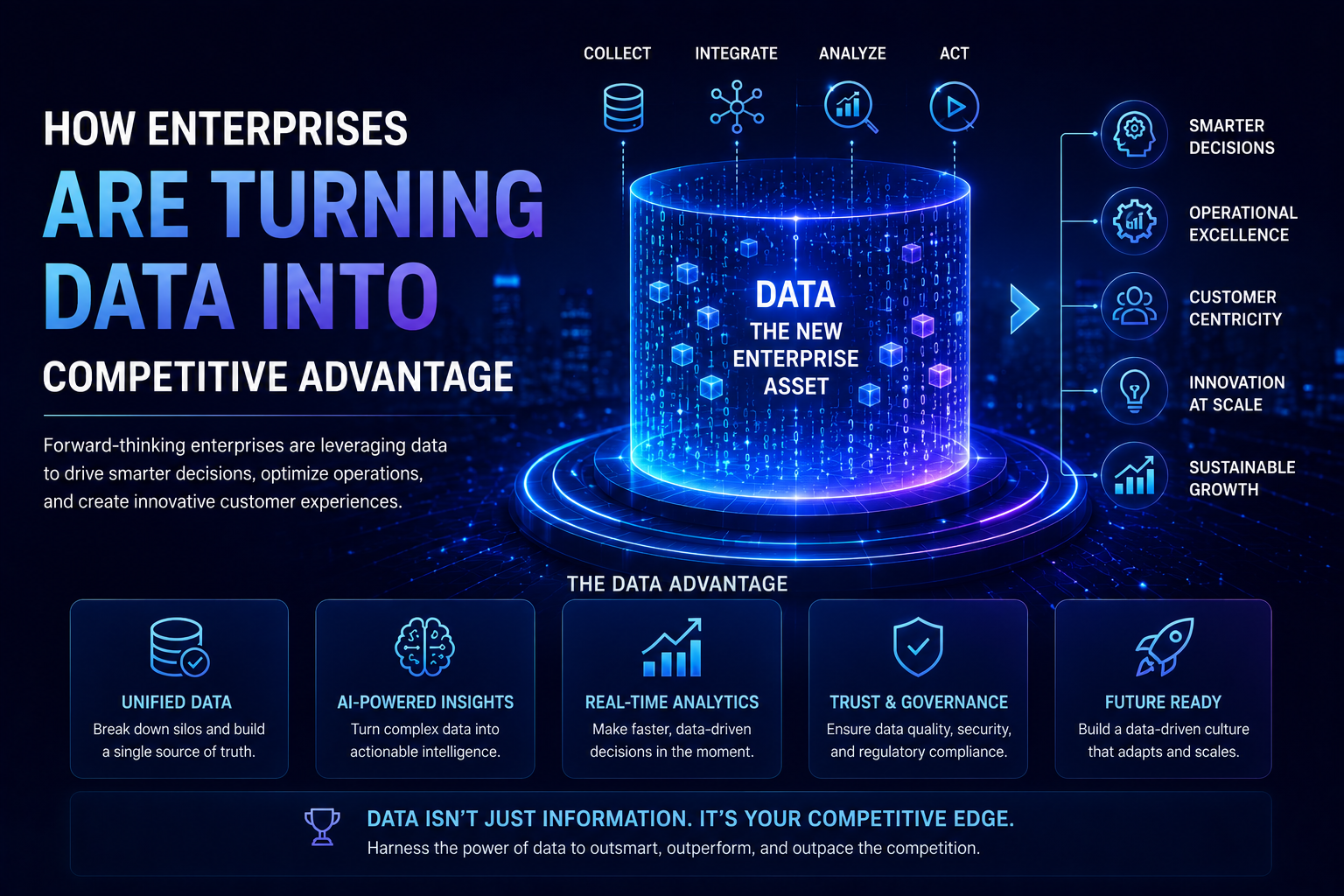
In 2026, data is no longer just a business resource—it is a strategic competitive advantage. Organizations that successfully collect, integrate, analyze, and act on data can innovate faster, serve customers better, and operate more efficiently than their competitors.
The most successful enterprises are moving beyond traditional reporting and embracing AI-driven insights, real-time intelligence, and intelligent automation to unlock the full value of their data.
With APISDOR as your technology partner, you can build modern data ecosystems that transform information into actionable intelligence, business growth, and long-term competitive advantage.


