
Decentralized Identity Systems for the Next Generation Internet
Introduction
As businesses and individuals become increasingly connected through cloud applications, mobile devices, IoT ecosystems, and digital services, identity management has become one of the most critical challenges of the digital age. Traditional identity systems often rely on centralized databases, making them vulnerable to cyberattacks, data breaches, identity theft, and privacy concerns.
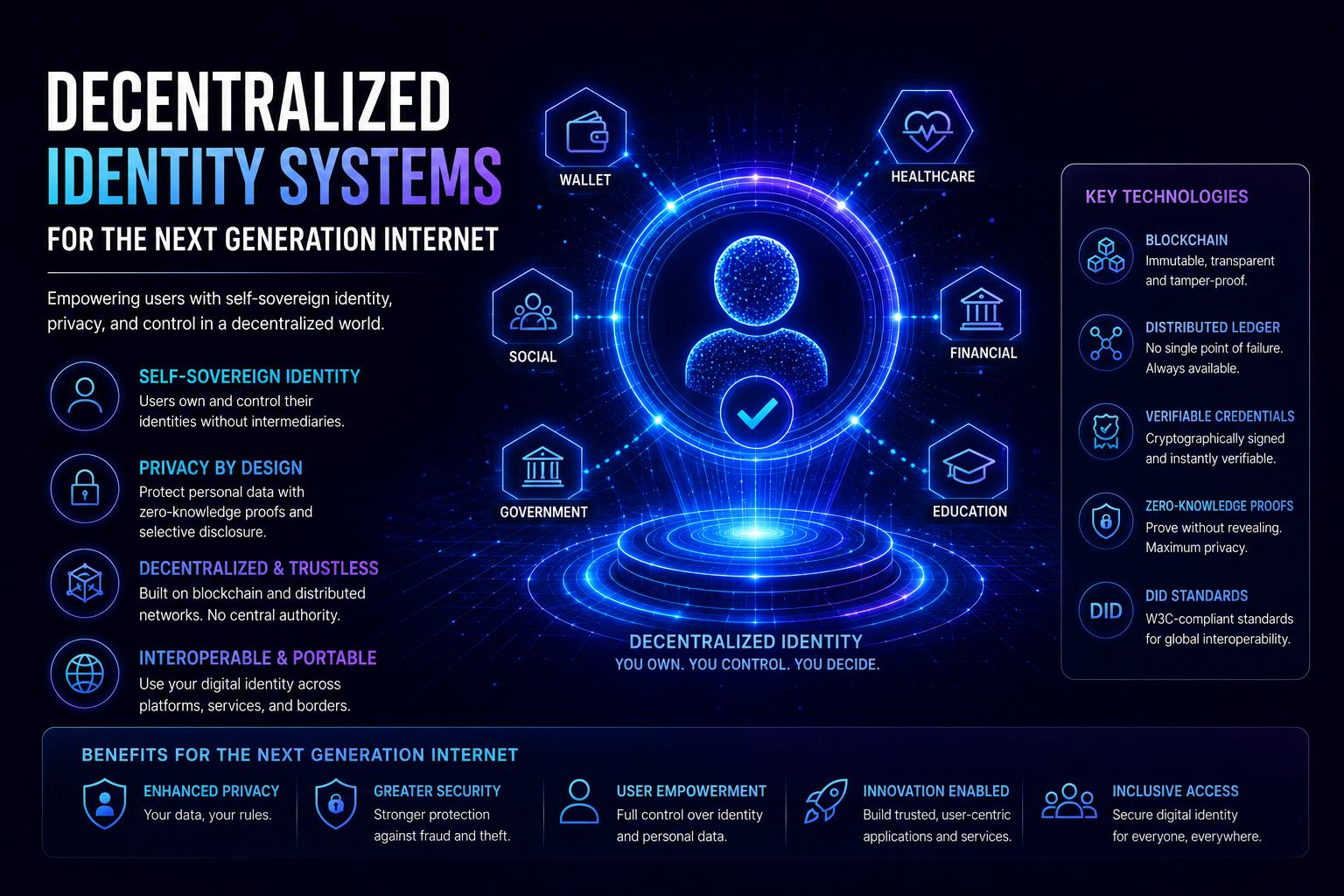
In 2026, organizations are exploring Decentralized Identity (DID) systems as a secure and privacy-first alternative. Built on blockchain, cryptography, and open identity standards, decentralized identity empowers users to control their own digital identities while enabling organizations to authenticate and verify information without exposing sensitive data.
For enterprises embracing digital transformation, decentralized identity is becoming a key building block of the next-generation Internet (Web3) and secure digital ecosystems.
At APISDOR, we help organizations design secure, scalable, and interoperable identity solutions that support digital transformation, regulatory compliance, and trusted online interactions.
What Is Decentralized Identity?
Decentralized Identity (DID) is a digital identity model where individuals or organizations own and control their identity credentials instead of relying on centralized identity providers.
Rather than storing sensitive information in a single database, decentralized identity uses:
- Blockchain technology
- Cryptographic verification
- Digital wallets
- Verifiable credentials
- Open identity standards
This approach allows users to securely prove their identity while maintaining privacy and control over personal information.
Why Traditional Identity Systems Need to Evolve
Traditional identity management systems face several challenges:
- Centralized Databases
A single breach can expose millions of user records. - Password Fatigue
Users manage dozens of passwords across multiple applications, increasing security risks. - Identity Fraud
Cybercriminals exploit weak authentication systems to steal identities and commit fraud. - Limited User Control
Users often have little visibility into how their personal information is stored or shared. - Regulatory Pressure
Organizations must comply with privacy regulations that require stronger protection of user data.
Decentralized identity addresses these challenges by shifting control from centralized platforms to the identity owner.
Why Decentralized Identity Matters in 2026
1. Greater Privacy
Users choose exactly what information they want to share.
For example, someone can prove they are over 18 without revealing their full date of birth.
This minimizes unnecessary data exposure.
2. Enhanced Security
Decentralized identity reduces the risks associated with centralized identity databases by using cryptographic verification and distributed trust models.
3. Improved User Experience
Instead of managing multiple usernames and passwords, users can securely authenticate across various services using trusted digital credentials.
4. Stronger Regulatory Compliance
Organizations can reduce the amount of personal data they store, helping simplify compliance with global privacy regulations.
5. Interoperability Across Digital Ecosystems
Decentralized identity enables trusted interactions across:
- Enterprise applications
- Government services
- Healthcare systems
- Financial institutions
- Digital marketplaces
using common identity standards.
Core Components of a Decentralized Identity System
Decentralized Identifiers (DIDs)
DIDs are unique identifiers that are:
- Globally unique
- Cryptographically verifiable
- Independent of centralized authorities
They form the foundation of decentralized identity systems.
Verifiable Credentials
These are digitally signed credentials issued by trusted organizations.
Examples include:
- Educational certificates
- Employee IDs
- Driver’s licenses
- Professional certifications
- Customer verification documents
Recipients can verify authenticity without contacting the issuing organization every time.
Digital Identity Wallets
Users store their credentials securely inside digital wallets.
The wallet enables:
- Credential management
- Secure authentication
- Selective information sharing
The identity owner remains in control.
Blockchain Network
Blockchain provides:
- Trust anchors
- DID registration
- Public verification mechanisms
- Immutable audit capabilities
Importantly, sensitive personal information is typically not stored directly on the blockchain. Instead, blockchain stores identifiers, cryptographic proofs, or references that support verification while preserving privacy.
Identity Verification Services
Organizations verify credentials using cryptographic proofs without requiring direct access to centralized identity databases.
How Decentralized Identity Works
A typical workflow includes:
- A trusted organization issues a verifiable credential.
- The credential is securely stored in the user’s digital identity wallet.
- The user requests access to a service.
- The service requests proof of specific information.
- The user shares only the required credentials.
- The organization verifies authenticity using cryptographic methods and decentralized identifiers.
This process eliminates unnecessary data sharing while maintaining trust.
Enterprise Use Cases
Employee Identity Management
Organizations can issue secure digital employee credentials for:
- Building access
- System authentication
- Remote workforce verification
Customer Onboarding
Banks and financial institutions can streamline Know Your Customer (KYC) processes by accepting verified digital credentials, reducing onboarding time while maintaining compliance.
Healthcare
Hospitals can securely verify:
- Medical professionals
- Patient identities
- Insurance credentials
while protecting sensitive medical information.
Education
Universities can issue tamper-proof digital diplomas and certificates that employers can verify instantly.
Supply Chain and Partner Networks
Organizations can verify supplier identities and partner credentials without relying on paper-based documentation.
Government Digital Services
Governments can enable secure access to public services using citizen-controlled digital identities.
Benefits of Decentralized Identity Systems
| Benefit | Business Impact |
|---|---|
| Enhanced Security | Reduced identity theft and fraud |
| Improved Privacy | Users control personal information |
| Faster Verification | Streamlined authentication processes |
| Better Compliance | Reduced storage of sensitive personal data |
| Lower Operational Costs | Less identity management overhead |
| Greater Trust | Stronger digital relationships between organizations and users |
Challenges Enterprises Should Consider
Adoption Across Ecosystems
The value of decentralized identity increases as more organizations adopt compatible standards and participate in trusted ecosystems.
Integration with Legacy Systems
Existing identity infrastructure may require APIs, middleware, or phased modernization to support decentralized identity.
Governance
Organizations must establish clear policies regarding:
- Credential issuance
- Identity verification
- Revocation
- Trust frameworks
User Education
Successful implementation depends on helping users understand:
- Digital wallets
- Credential management
- Identity ownership
- Privacy controls
Best Practices for Implementing Decentralized Identity
Adopt Open Standards
Build solutions that support widely accepted decentralized identity specifications to ensure interoperability.
Protect User Privacy
Share only the minimum information required for each transaction using selective disclosure techniques.
Integrate with Existing Systems
Use APIs and identity gateways to connect decentralized identity with enterprise applications.
Establish Governance
Define policies for credential issuance, verification, lifecycle management, and compliance.
Design for Scalability
Build cloud-native identity services that support future growth and cross-platform interoperability.
How APISDOR Helps Build Secure Digital Identity Solutions
At APISDOR, we help enterprises:
- Design decentralized identity architectures
- Develop API-driven identity platforms
- Integrate blockchain with enterprise applications
- Build secure authentication systems
- Implement governance and compliance frameworks
- Enable scalable digital identity ecosystems
Our goal is to help organizations build trusted digital experiences that are secure, privacy-focused, and future-ready for the internet.
FAQs: Decentralized Identity Systems
Q1. What is decentralized identity?
A: Decentralized identity is a model that allows individuals and organizations to own, manage, and control their digital identities without relying on centralized identity providers.
Q2. Is decentralized identity the same as blockchain?
A: No. Blockchain is one technology that can support decentralized identity by providing trust and verification, but the identity data itself is typically managed through digital wallets and verifiable credentials.
Q3. How does decentralized identity improve security?
A: It reduces reliance on centralized identity databases, minimizes sensitive data storage, and uses cryptographic verification to authenticate users securely.
Q4. Which industries benefit most from decentralized identity?
A: Financial services, healthcare, education, government, logistics, and enterprise technology are among the leading adopters.
Q5. Can decentralized identity work with existing enterprise systems?
A: Yes. APIs, identity gateways, and interoperability standards allow decentralized identity solutions to integrate with modern and legacy enterprise applications.
Conclusion
Decentralized identity systems are set to play a vital role in the next generation of the internet by giving individuals greater control over their digital identities while helping organizations improve security, privacy, and trust.
As enterprises continue their digital transformation journeys, adopting decentralized identity can reduce fraud, simplify compliance, and create seamless digital experiences across business ecosystems.
With APISDOR as your technology partner, you can build secure, scalable, and future-ready decentralized identity solutions that support innovation and trusted digital interactions in an increasingly connected world.


