
Enterprise Blockchain Platforms for Secure Digital Ecosystems
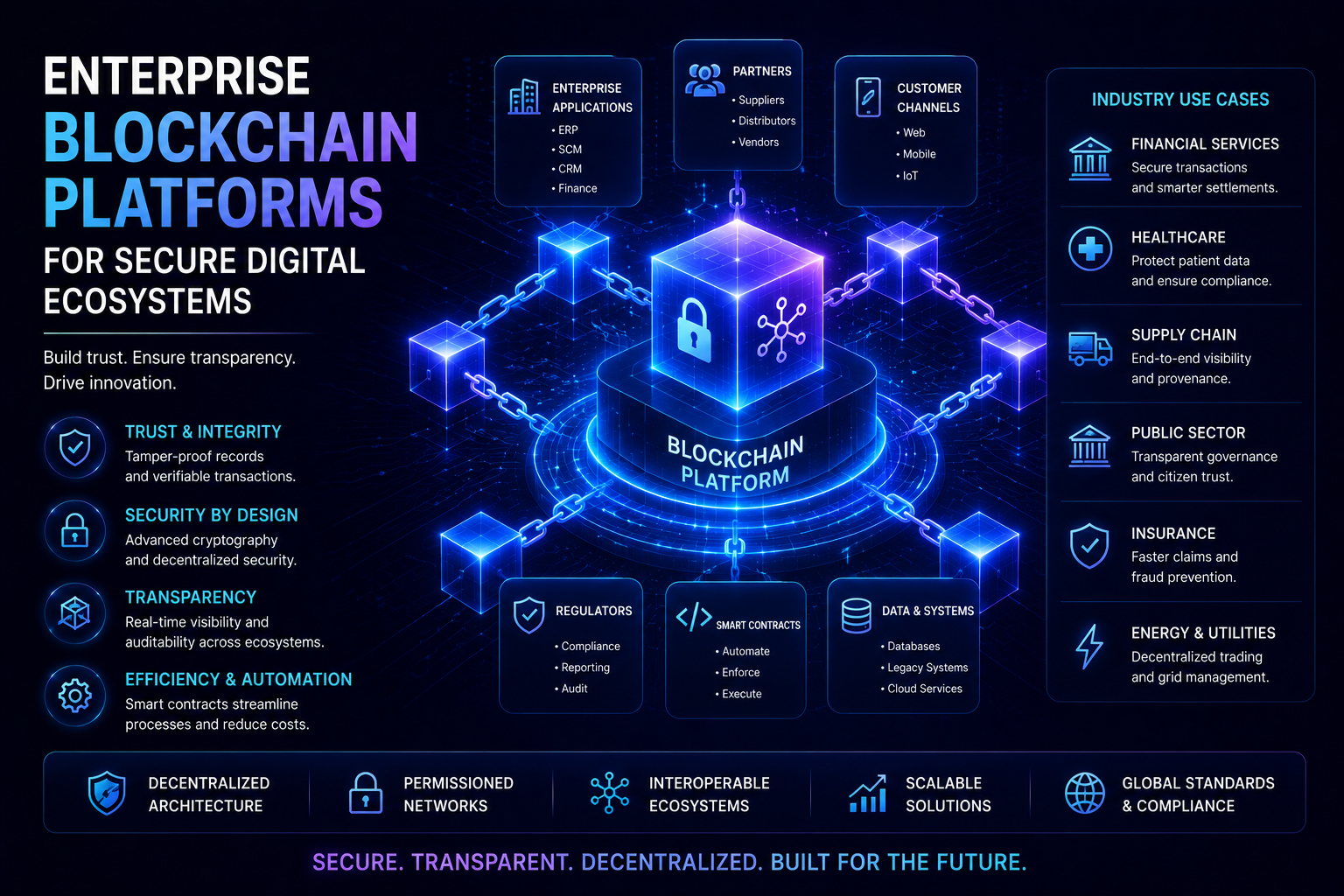
Introduction
As organizations accelerate digital transformation, the need for secure, transparent, and trusted digital interactions has never been greater. Enterprises today operate across complex ecosystems involving customers, suppliers, partners, regulators, and cloud-based applications. Managing trust and ensuring data integrity across these interconnected environments is a growing challenge.
This is where Enterprise Blockchain Platforms are creating significant value. Unlike public blockchain networks primarily associated with cryptocurrencies, enterprise blockchain solutions are designed to support business operations with enhanced security, governance, scalability, and interoperability.
In 2026, enterprise blockchain platforms are becoming a foundational technology for building secure digital ecosystems that enable trusted collaboration, streamlined operations, and digital innovation.
At APISDOR, we help organizations design and implement blockchain-powered solutions that enhance security, transparency, and operational efficiency across enterprise environments.
What Are Enterprise Blockchain Platforms?
Enterprise blockchain platforms are permissioned distributed ledger systems designed specifically for business use cases.
These platforms enable multiple organizations or stakeholders to share information securely without relying on a centralized authority.
Key characteristics include:
- Permissioned access controls
- Distributed data management
- Immutable transaction records
- Smart contract automation
- Enterprise-grade security
- Regulatory compliance support
Unlike public blockchains, enterprise platforms prioritize performance, governance, and business process integration.
Why Enterprises Are Adopting Blockchain Platforms
1. Building Trust Across Digital Ecosystems
Modern enterprises often collaborate with:
- Suppliers
- Business partners
- Customers
- Financial institutions
- Government agencies
Blockchain provides a shared and tamper-resistant record of transactions, creating trust among participants.
2. Enhancing Security
Enterprise blockchain platforms offer:
- Cryptographic protection
- Distributed validation
- Immutable audit trails
This significantly reduces the risk of fraud, data manipulation, and unauthorized changes.
3. Improving Transparency
Organizations gain visibility into:
- Transactions
- Asset movements
- Workflow execution
- Compliance activities
This transparency improves accountability across business networks.
4. Automating Business Processes
Smart contracts allow enterprises to automate:
- Contract execution
- Approval workflows
- Compliance checks
- Payment processing
This reduces manual intervention and operational costs.
5. Supporting Regulatory Compliance
Blockchain platforms help organizations:
- Maintain audit-ready records
- Track data lineage
- Improve reporting accuracy
- Demonstrate compliance
This is particularly valuable in regulated industries.
Core Components of Enterprise Blockchain Platforms
Distributed Ledger Infrastructure
The ledger stores transaction records across multiple participating nodes.
Benefits include:
- High availability
- Data integrity
- Fault tolerance
No single party controls the entire system.
Consensus Mechanisms
Consensus algorithms validate transactions and maintain trust.
Enterprise platforms commonly use:
- Practical Byzantine Fault Tolerance (PBFT)
- Proof of Authority (PoA)
- Raft Consensus
These mechanisms offer better performance than public blockchain alternatives.
Smart Contracts
Smart contracts execute predefined business rules automatically.
Examples include:
- Insurance claim processing
- Supply chain approvals
- Financial settlements
- Vendor payments
Automation improves efficiency and consistency.
Identity and Access Management
Enterprise blockchain platforms implement:
- Role-based permissions
- Digital identity verification
- Secure authentication
This ensures only authorized participants have access to sensitive information.
API and Integration Layer
APIs connect blockchain networks with:
- ERP systems
- CRM platforms
- Cloud applications
- Analytics tools
- AI systems
Integration ensures blockchain becomes part of the broader enterprise ecosystem.
Monitoring and Governance Frameworks
Organizations require:
- Audit trails
- Activity monitoring
- Policy enforcement
- Performance tracking
Governance ensures operational reliability and regulatory compliance.
Enterprise Blockchain Use Cases
Supply Chain Transparency
Blockchain helps organizations:
- Track products from origin to delivery
- Verify authenticity
- Improve supplier accountability
This increases trust throughout the supply chain.
Financial Services
Banks and financial institutions use blockchain for:
- Cross-border payments
- Digital asset management
- Fraud prevention
- Regulatory reporting
This improves efficiency and security.
Healthcare Data Management
Healthcare organizations use blockchain to:
- Secure patient records
- Improve data sharing
- Enhance privacy controls
This supports better patient outcomes and compliance.
Digital Identity Verification
Blockchain enables:
- Secure identity management
- Decentralized authentication
- Fraud reduction
Organizations gain stronger identity controls.
Contract and Document Management
Smart contracts automate:
- Legal agreements
- Procurement workflows
- Vendor management
This reduces processing times and administrative overhead.
Blockchain and Secure Digital Ecosystems
A secure digital ecosystem requires:
- Trusted Data Exchange
Blockchain ensures participants can share information confidently. - Data Integrity
Records cannot be altered without consensus, ensuring accuracy and reliability. - Decentralized Collaboration
Organizations can collaborate without relying on a single central authority. - Secure Automation
Smart contracts automate transactions while maintaining transparency and trust. - Cross-Organization Visibility
Participants gain a shared view of critical information and workflows.
Enterprise Blockchain vs Traditional Systems
| Traditional Systems | Enterprise Blockchain Platforms |
|---|---|
| Centralized databases | Distributed ledgers |
| Limited transparency | Shared visibility |
| Manual verification | Automated validation |
| Higher fraud risk | Tamper-resistant records |
| Complex reconciliation | Single source of truth |
| Limited trust across organizations | Trusted collaboration environments |
Blockchain fundamentally changes how organizations share and verify information.
Challenges of Enterprise Blockchain Adoption
Integration Complexity
Blockchain platforms must integrate with:
- Legacy systems
- Enterprise applications
- Existing workflows
Successful adoption requires careful planning.
Governance Requirements
Organizations must define:
- Access policies
- Network participation rules
- Compliance procedures
Strong governance is essential.
Scalability Considerations
As transaction volumes increase, infrastructure must support:
- High throughput
- Low latency
- Reliable performance
Skills and Expertise
Enterprises often need specialized knowledge in:
- Blockchain architecture
- Smart contract development
- Security and governance
Best Practices for Enterprise Blockchain Implementation
- Start With High-Value Use Cases
Focus on areas where trust, transparency, and automation deliver measurable benefits. - Build an API-First Integration Strategy
Ensure blockchain systems integrate seamlessly with enterprise applications. - Implement Strong Governance
Establish clear policies for:- Security
- Access control
- Compliance
- Network participation
- Design for Scalability
Choose infrastructure capable of supporting future growth and adoption. - Prioritize Security
Implement:- Encryption
- Identity management
- Continuous monitoring
- Smart contract audits
Benefits of Enterprise Blockchain Platforms
| Benefit | Business Impact |
|---|---|
| Enhanced Security | Reduced fraud and data tampering |
| Transparency | Improved trust and accountability |
| Automation | Faster business processes |
| Compliance | Better auditability and reporting |
| Efficiency | Reduced operational costs |
| Collaboration | Stronger partner and ecosystem relationships |
How APISDOR Helps Enterprises Build Blockchain Ecosystems
At APISDOR, we help organizations:
- Design enterprise blockchain architectures
- Develop smart contract solutions
- Integrate blockchain with enterprise systems
- Build API-driven blockchain ecosystems
- Implement governance and security frameworks
- Scale blockchain solutions for enterprise operations
Our goal is to help businesses create secure digital ecosystems that support innovation, trust, and long-term growth.
FAQs: Enterprise Blockchain Platforms
Q1. What is an enterprise blockchain platform?
A: An enterprise blockchain platform is a permissioned distributed ledger system designed for business applications, security, and governance.
Q2. How is enterprise blockchain different from public blockchain?
A: Enterprise blockchains are controlled, permission-based networks focused on business use cases, while public blockchains are open to anyone.
Q3. Are enterprise blockchain platforms secure?
A: Yes. They use cryptographic security, access controls, distributed validation, and immutable records.
Q4. Can blockchain integrate with existing enterprise applications?
A: Yes. APIs and middleware allow blockchain platforms to connect with ERP, CRM, cloud, and analytics systems.
Q5. Which industries benefit most from enterprise blockchain?
A: Financial services, healthcare, logistics, manufacturing, retail, and government organizations are among the leading adopters.
Conclusion
Enterprise blockchain platforms are becoming a critical foundation for secure digital ecosystems in 2026. By enabling trusted collaboration, transparent transactions, automated workflows, and stronger security, blockchain helps organizations modernize operations while reducing risk.
As digital ecosystems continue to expand, enterprises that invest in blockchain infrastructure will be better positioned to build trust, improve efficiency, and support future innovation.
With APISDOR as your technology partner, you can create enterprise blockchain solutions that deliver secure, scalable, and future-ready digital ecosystems designed for long-term business success.


