
Mastering App Development Through Five Simple Steps
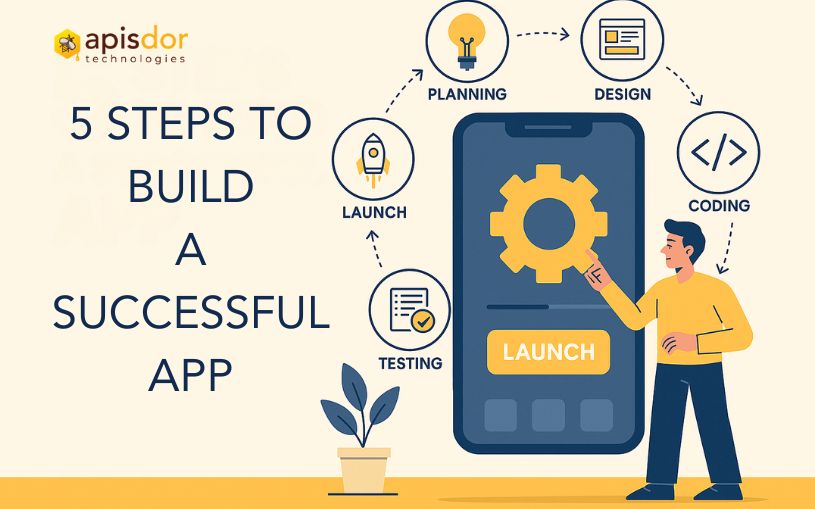
In today’s fast-paced digital world, creating a successful app is like setting sail on an exciting journey for businesses of all sizes. Whether you aim to smooth out operations or captivate customers, understanding the rocky seas of the app development process is essential. Here, we navigate through the intricate voyage of five straightforward steps, guiding you from brainstorming to the grand launch.
This blog post will illuminate the importance of planning, designing, coding, testing, and launching—each phase working together like a well-oiled ship to ensure a seamless development experience. With clear examples and actionable insights, you’ll have all the tools necessary to develop not just any app, but a triumphant one.
Let’s dive in!
Step 1: Planning Your App
The keystone of any app development process is planning. This stage is akin to drafting the blueprint for your ship, as it involves defining your app’s purpose, identifying your target audience, and analyzing competitors. It’s crucial to perform a SWOT analysis—considering your app’s strengths, weaknesses, opportunities, and threats.
Market research serves as your compass during the planning process. According to a survey by
According to a survey by Statista, 22% of app developers emphasize the importance of understanding user needs.
This data demonstrates that knowing what your audience seeks can heavily steer design and functionality.
Defining Your Goals
Your goals should be specific, measurable, achievable, relevant, and time-bound (SMART). For instance, if you aim to enhance customer service, your app should include features that allow seamless communication between customers and support teams.
Step 2: Designing the User Experience
Once you have a solid plan, it’s time to design your app. This stage involves sculpting user interfaces (UI) and crafting user experiences (UX) that are intuitive and visually appealing.
Utilizing wireframes and prototypes can help visualize the layout and functionality.
According to Forrester Research, focusing on user experience leads to highre customer satisfaction, which ultimately drives engagement.
Key Design Principles
Keep designs simple yet effective. Use consistent branding elements, maintain color balance, and ensure easy navigation. Engaging visuals can enhance user experience, so invest time in selecting the right graphics.
Step 3: Coding the Application
Coding is the backbone of your app—like assembling the components of a finely-tuned engine. This stage brings design concepts to life, transforming them into functional applications. Choose the right programming language based on the platforms you wish to target. Common choices include Swift for iOS and Kotlin for Android.
Utilizing a version control system like Git is crucial during this phase. It helps manage code changes effectively, particularly for larger teams.
A study by GitHub reveals that teams using version control have 50% fewer bugs in their applications.
Collaborating with Developers
Effective communication among your team can significantly boost efficiency. Frequent check-ins and code reviews are essential to ensure that the project stays on course.
Step 4: Testing the App
Before launching, meticulous testing is necessary to identify and fix any bugs. This phase encompasses various testing methods, including functionality testing, usability testing, and performance testing.
Your goal during testing is to ensure your app is user-friendly and operates smoothly.
A report from Pew Research states that 77% of users uninstall an app due to poor performance, showcasing how vital this step is.
Automating Tests
Consider using automated testing tools to streamline the process. Tools like Selenium or TestComplete can execute repetitive tests efficiently, saving both time and resources.
Step 5: Launching the Application
At last, you reach the exhilarating stage of launching your app! This involves submitting your app to relevant app stores—Apple App Store or Google Play Store—and promoting it across various channels.
Gathering user feedback post-launch is crucial for continuous improvement. Implementing an app store optimization strategy can also enhance visibility.
Post-Launch Strategies
Focus on marketing strategies like social media campaigns, influencer collaborations, and email marketing. These tactics can significantly extend your app’s reach.
Conclusion
Creating an app may seem like a formidable task, but following these five simple steps can make the journey easier to navigate. From planning to launching, each stage plays a critical role in your app’s success.
As technology evolves, staying on top of trends and user expectations is essential. Remember to adapt and iterate based on feedback to continually meet your users’ needs.
With dedication and creative problem-solving, your app can thrive in a competitive landscape. Embrace the journey and empower your vision with these steps!
FAQs
Q1: What is the app development process?
A: The app development process is a systematic approach to creating applications, involving steps such as planning, designing, coding, testing, and launching.
Q2: Why is user experience important?
A: User experience is vital because it directly impacts user satisfaction, engagement, and retention. Good UX design fosters a positive relationship with the app.
Q3: How do I choose the right programming language for my app?
A: The choice of programming language hinges on the desired platform. For iOS apps, Swift is preferred, while Android apps often utilize Kotlin.
Q4: What are effective ways to market my app after launch?
A: Effective marketing strategies include social media engagement, influencer collaborations, and focused app store optimization to enhance visibility.
Q5: How can I gather user feedback post-launch?
A: Gather user feedback through in-app prompts, surveys, and social media interactions to identify areas for improvement and user satisfaction.


