
Unlocking Business Success with Essential Features of Enterprise Mobile Apps
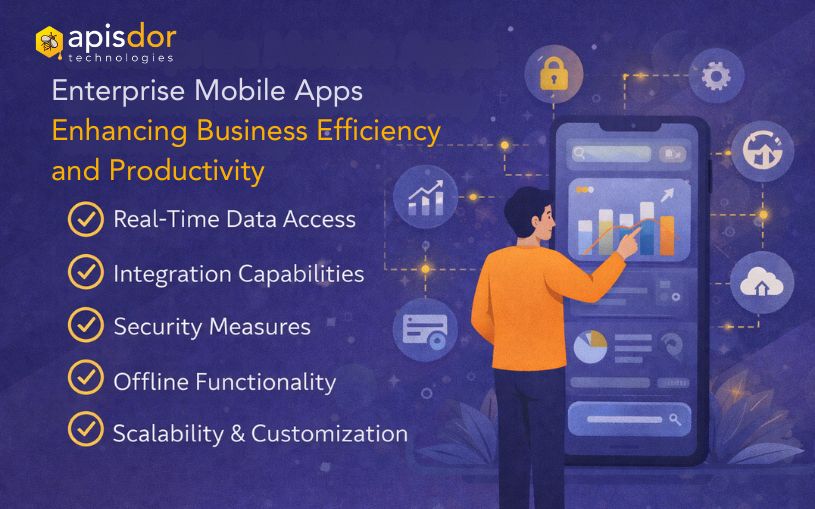
In today’s fast-paced digital world, enterprise mobile apps are no longer optional but a necessity for businesses aiming to enhance their efficiency and productivity. The pressure to stay competitive pushes organizations to leverage technology that allows seamless operations while improving communication and service delivery. This transformation not only simplifies everyday tasks but also offers significant strategic advantages.
This blog post will explore the essential features of enterprise mobile apps that elevate business efficiency and productivity. We’ll dive into user experience, real-time data access, integration capabilities, security measures, and more. By understanding these critical aspects, businesses can implement mobile solutions that truly add value, streamline processes, and gain a competitive edge in the market.
Let’s delve into these features and how they can be leveraged for optimal business performance!
User Experience and Interface
Creating an intuitive and user-friendly interface is vital for any enterprise mobile app. A well-designed app ensures ease of use, driving employee engagement and minimizing the learning curve. According to a study by Forrester, a positive user experience can boost customer satisfaction ratings by 20%. A focus on usability can lead to higher productivity levels, further enhancing operational efficiency.
Moreover, incorporating responsive design ensures that the app functions seamlessly across various devices, from smartphones to tablets, allowing employees to work effectively, regardless of location. Implementing user feedback can continuously improve the interface and enhance the user experience.
Real-Time Data Access
Providing employees with real-time access to relevant data is a transformative feature of enterprise mobile apps. It empowers workers to make informed decisions quickly, significantly reducing response times. As stated in a report from Deloitte, companies that leverage real-time data can improve their operational efficiency by 43%.
Integrating analytics tools within the app allows employees to track performance metrics and key performance indicators (KPIs) seamlessly. This not only fosters a data-driven culture but also enhances strategic planning and execution, driving business growth.
Integration Capabilities
A successful enterprise mobile app must boast robust integration capabilities with existing systems such as CRM and ERP. This ensures that all business functions are interconnected, allowing for streamlined operations and improved workflows. As per a survey conducted by TechPro Research, 83% of organizations consider integration features crucial in their mobile app development.
Seamless integration reduces the risk of data silos, ensuring that every team member accesses real-time information across platforms. This connectivity leads to improved collaboration and productivity, freeing up resources to focus on strategic initiatives that support growth.
Security Measures
In an era where data breaches are prevalent, security is paramount for enterprise mobile apps. Protecting sensitive information and ensuring regulatory compliance must be a priority. Implementing features such as two-factor authentication, encryption, and regular security audits can fortify the app against potential threats.
According to a report from Cybersecurity Ventures, cybercrime is projected to cost businesses over $6 trillion annually by 2021. Therefore, investing in security features not only safeguards your assets but also builds trust among employees and clients alike.
Offline Functionality
Unexpected circumstances or connectivity issues can hinder productivity if users depend entirely on an internet connection. Hence, offline functionality is a necessary feature of enterprise mobile apps. With this capability, users can access critical information and perform tasks, even without an internet connection.
Many businesses have experienced significant boosts in productivity due to offline access, which enables uninterrupted workflow. When the device reconnects, data can sync automatically, ensuring that users stay up to date with minimal disruption.
Scalability and Customization
As business needs evolve, so too should your mobile app. Enterprise mobile apps must be scalable and customizable to adapt to changing requirements. This flexibility allows for new features, integrations, and updates to be added with ease.
By partnering with agile development teams, businesses can create tailor-made solutions suited to their specific needs. Companies that prioritize scalability prepare themselves for future growth and changing market demands.
Analytics and Feedback Mechanisms
Incorporating analytics and feedback systems enables businesses to evaluate app performance and user engagement continuously. Gathering insights into how employees interact with the app can point out necessary improvements and adjustments to optimize productivity.
Your enterprise mobile app should come equipped with tools to collect this data effortlessly, empowering management to make informed decisions that enhance user experience and operational efficiency.
Conclusion
The features of enterprise mobile apps play a crucial role in elevating business efficiency and productivity. By focusing on user experience, real-time data access, integration, security, offline functionality, scalability, and analytics, organizations can implement effective solutions that drive success.
In conclusion, as technology continues to shape the future of work, adopting mobile innovations in the enterprise sector is imperative. These applications not only enhance operations but also foster a more connected, efficient workplace, enabling businesses to thrive in a competitive landscape. Investing in a robust enterprise mobile app is not just a trend; it’s a strategic move towards secure, sustainable growth.
FAQs
Here are some frequently asked questions about enterprise mobile apps:
Q1: What is an enterprise mobile app?
A: An enterprise mobile app is a software application designed specifically for businesses to enhance their productivity and streamline operations. These apps often cater to internal employee needs, enabling improved communication and collaboration.
Q2: How do enterprise mobile apps improve productivity?
A: They enhance productivity by providing real-time data access, intuitive user interfaces, and seamless integration with existing systems. This allows employees to make quick decisions and enhances collaboration between teams.
Q3: Are enterprise mobile apps secure?
A: Yes, most enterprise mobile apps include security features such as encryption, two-factor authentication, and regular security audits to protect sensitive business information from breaches.
Q4: Can enterprise mobile apps work offline?
A: Yes, many enterprise mobile apps offer offline functionality, allowing users to access critical information and perform tasks without an internet connection, which can boost productivity in areas with poor connectivity.
Q5: Is customization a feature of enterprise mobile apps?
A: Absolutely! Customization is essential for enterprise mobile apps, allowing businesses to tailor features and capabilities to meet their specific needs and adapt to changing market demands.


