
The Rise of Autonomous Enterprise Platforms Powered by AI
https://www.apisdor.com/blog/real-time-data-systems-for-modern-applications/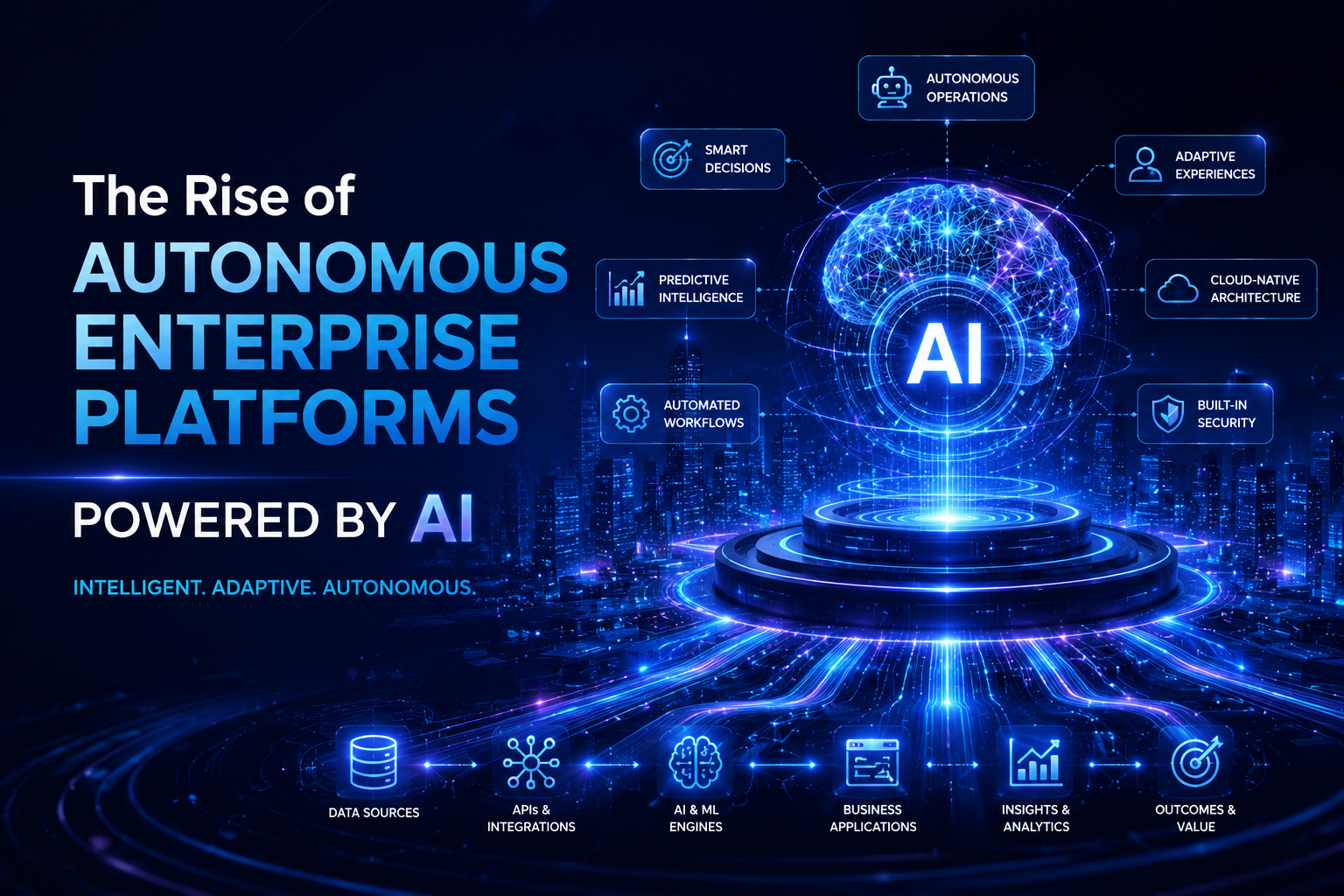
Introduction
Enterprise technology is entering a new era. Traditional digital platforms were designed to support human-driven workflows, in which systems executed predefined instructions, and employees made most operational decisions.
In 2026, this model is rapidly evolving. Organizations are now building autonomous enterprise platforms powered by AI systems that analyze data, make decisions, orchestrate workflows, and optimize operations with minimal human intervention.
These intelligent platforms are transforming how enterprises operate by combining:
- Artificial Intelligence (AI)
- AI agents and decision engines
- Real-time data systems
- Workflow automation
- Cloud-native infrastructure
- API-driven integration ecosystems
At APISDOR, we help enterprises design autonomous digital platforms that enable intelligent operations, faster innovation, and scalable business transformation.
What Are Autonomous Enterprise Platforms?
Autonomous enterprise platforms are intelligent digital ecosystems capable of:
- Monitoring business operations continuously
- Understanding contextual data
- Making real-time decisions
- Executing automated workflows
- Optimizing processes dynamically
Unlike traditional enterprise systems that rely heavily on manual oversight, autonomous platforms operate using AI-driven intelligence and adaptive automation.
These platforms combine software, data, automation, and AI into a unified operational architecture.
Why Autonomous Platforms Are Rising in 2026
1. Growing Operational Complexity
Modern enterprises operate across:
- Multi-cloud environments
- Distributed applications
- SaaS ecosystems
- Real-time customer channels
- Global operations
Managing these systems manually is becoming unsustainable.
Autonomous platforms reduce operational complexity through intelligent automation.
2. Real-Time Business Expectations
Customers and businesses expect:
- Instant responses
- Continuous service availability
- Personalized experiences
- Real-time operational decisions
Autonomous AI systems enable enterprises to meet these expectations at scale.
3. AI Maturity and Enterprise Adoption
Advances in:
- Large Language Models (LLMs)
- AI agents
- Predictive analytics
- Event-driven systems
have made autonomous enterprise operations technically viable.
4. Pressure to Improve Efficiency
Organizations are seeking:
- Lower operational costs
- Faster decision-making
- Increased productivity
- Reduced manual intervention
AI-powered platforms help optimize resources and streamline operations automatically.
Core Components of Autonomous Enterprise Platforms
1. AI and Decision Intelligence Layer
This layer includes:
- AI agents
- Machine learning models
- LLM-based reasoning systems
- Predictive analytics engines
It powers autonomous decision-making across workflows and systems.
2. Real-Time Data Infrastructure
Autonomous systems rely on:
- Streaming data pipelines
- Event-driven architectures
- Real-time analytics platforms
Continuous data flow enables intelligent actions and adaptability.
3. Workflow Automation and Orchestration
Automation platforms coordinate:
- Cross-system workflows
- AI-triggered actions
- Multi-step business processes
This creates self-operating business operations.
4. API-First Integration Ecosystem
APIs connect:
- Enterprise applications
- Cloud services
- Data systems
- External partner platforms
API-driven integration enables modular and scalable operations.
5. Cloud-Native Infrastructure
Cloud-native technologies provide:
- Elastic scalability
- Resilience and fault tolerance
- Distributed computing power
This supports high-performance autonomous systems.
6. Governance and Security Framework
Autonomous platforms require:
- Identity and access management
- Explainable AI
- Auditability and compliance
- Continuous monitoring
Governance ensures trust and operational reliability.
| Traditional Enterprise Systems | Autonomous Enterprise Platforms |
|---|---|
| Rule-based workflows | AI-driven adaptive workflows |
| Human-centric operations | AI-assisted and autonomous operations |
| Batch processing | Real-time intelligence |
| Static business logic | Self-optimizing decision systems |
| Manual monitoring | Continuous autonomous monitoring |
This shift fundamentally changes enterprise architecture and operational models.
Enterprise Use Cases
Autonomous IT Operations (AIOps)
AI platforms can:
- Detect anomalies
- Predict outages
- Trigger remediation workflows automatically
This creates self-healing infrastructure environments.
Intelligent Customer Experience Platforms
Autonomous systems enable:
- AI-powered support agents
- Personalized customer journeys
- Real-time engagement optimization
Autonomous Supply Chains
AI-driven platforms:
- Predict demand changes
- Optimize logistics
- Manage inventory dynamically
Financial Operations Automation
Autonomous finance platforms:
- Detect fraud
- Analyze transactions in real time
- Automate compliance and reporting
Enterprise Knowledge and Productivity Systems
AI platforms help:
- Retrieve enterprise knowledge
- Automate internal workflows
- Assist employees with intelligent recommendations
Benefits of Autonomous Enterprise Platforms
| Benefit | Impact |
|---|---|
| Efficiency | Reduced manual operations |
| Agility | Faster business response times |
| Intelligence | Context-aware decision-making |
| Scalability | Handles complex enterprise environments |
| Innovation | Enables new digital business models |
Autonomous platforms transform enterprises into adaptive, intelligent organizations.
Challenges Enterprises Must Address
AI Governance and Trust
Organizations must ensure:
- Responsible AI usage
- Transparent decision-making
- Human oversight where needed
Data Quality and Integration
Autonomous systems require:
- High-quality data
- Unified integration frameworks
- Real-time synchronization
Security and Compliance
AI-driven operations increase the need for:
- API security
- Identity management
- Continuous monitoring
Infrastructure Scalability
Autonomous platforms require:
- Cloud-native architecture
- High-performance computing
- Event-driven systems
Best Practices for Building Autonomous Platforms
- Start with high-value operational use cases
- Adopt API-first and event-driven architecture
- Combine AI with workflow automation
- Maintain strong governance and observability
- Scale incrementally across business functions
Successful transformation happens in phases.
How APISDOR Helps Build Autonomous Enterprise Platforms
At APISDOR, we help enterprises:
- Design AI-native enterprise architectures
- Implement workflow orchestration and automation systems
- Integrate AI agents with APIs and enterprise applications
- Build scalable cloud-native infrastructures
- Ensure governance, security, and compliance
We focus on building intelligent enterprise ecosystems that deliver real business outcomes through autonomous operations.
FAQs: Autonomous Enterprise Platforms
Q1. What is an autonomous enterprise platform?
A: It is an AI-powered system capable of making decisions and automating operations with minimal human intervention.
Q2. How are autonomous platforms different from traditional automation?
A: Traditional automation follows fixed rules, while autonomous platforms use AI to adapt and optimize dynamically.
Q3. Are autonomous enterprise systems secure?
A: Yes, when implemented with proper governance, monitoring, and security frameworks.
Q4. Can autonomous platforms integrate with legacy systems?
A: Yes. APIs and integration layers allow gradual modernization.
Q5. Which industries benefit most from autonomous platforms?
A: Finance, healthcare, retail, logistics, SaaS, and manufacturing are leading adopters.
Conclusion
The rise of autonomous enterprise platforms marks a major shift in digital transformation. By combining AI, automation, real-time data, and cloud-native infrastructure, enterprises can create systems that operate intelligently and adapt continuously.
In 2026 and beyond, organizations that adopt autonomous platforms will gain significant advantages in efficiency, scalability, and innovation.
With APISDOR as your technology partner, you can build intelligent, AI-powered enterprise platforms designed for the future of business operations.


