
Building Intelligent Automation Platforms With APIs and AI
Introduction
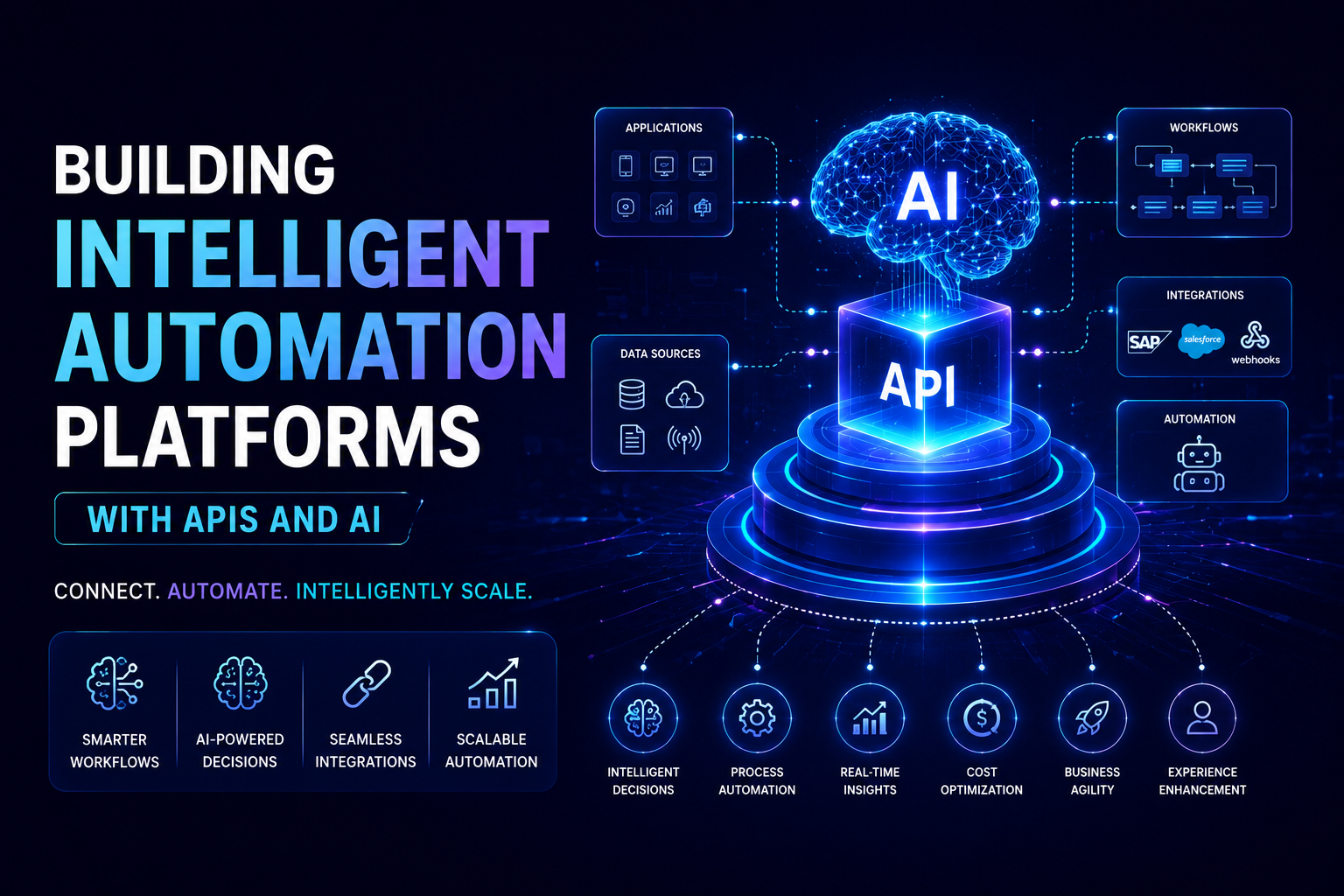
Automation is no longer just about eliminating repetitive tasks. In 2026, enterprises are building intelligent automation platforms that combine Artificial Intelligence (AI), APIs, workflow orchestration, and real-time data processing to create smarter, more adaptive business operations.
These platforms go beyond traditional automation by enabling systems to analyze data, make decisions, trigger actions, and continuously optimize workflows with minimal human intervention.
As organizations accelerate digital transformation initiatives, intelligent automation platforms are becoming a critical foundation for operational efficiency, scalability, and innovation.
At APISDOR, we help enterprises design and implement AI-powered automation ecosystems that connect systems, people, and processes through APIs and intelligent workflows.
What Is an Intelligent Automation Platform?
An intelligent automation platform combines:
- Artificial Intelligence (AI)
- Workflow Automation
- API Integrations
- Data Analytics
- Event-Driven Architecture
- Machine Learning Models
to automate not only tasks but also decision-making processes.
Unlike traditional automation systems that rely on fixed rules, intelligent platforms can:
- Understand context
- Process structured and unstructured data
- Learn from historical patterns
- Adapt workflows dynamically
- Trigger actions based on real-time events
This enables organizations to move from process automation to business intelligence-driven automation.
Why Enterprises Are Investing in Intelligent Automation
1. Increasing Operational Complexity
Modern enterprises manage:
- Multiple cloud platforms
- SaaS applications
- Legacy systems
- Customer channels
- Data ecosystems
Managing these manually is expensive and inefficient.
Intelligent automation helps unify and streamline operations.
2. Demand for Real-Time Decision-Making
Business leaders require:
- Instant insights
- Automated responses
- Predictive recommendations
AI-powered automation platforms enable organizations to act immediately on changing business conditions.
3. Rising Customer Expectations
Customers expect:
- Personalized experiences
- Faster service delivery
- Proactive support
Intelligent automation helps organizations meet these expectations at scale.
4. Need for Business Agility
Organizations must quickly adapt to:
- Market shifts
- Regulatory changes
- Technology disruptions
Automation platforms provide flexibility and scalability for rapid adaptation.
The Role of APIs in Intelligent Automation
APIs serve as the backbone of intelligent automation platforms.
They allow systems to:
- Exchange data seamlessly
- Trigger automated workflows
- Connect cloud and on-premise applications
- Enable AI systems to interact with enterprise services
Without APIs, intelligent automation cannot scale across modern digital ecosystems.
Key API Functions
Data Integration
APIs connect:
- CRM systems
- ERP platforms
- Data warehouses
- AI services
creating a unified operational environment.
Workflow Orchestration
APIs allow automation platforms to:
- Initiate business processes
- Trigger actions across applications
- Synchronize information in real time
AI Enablement
AI systems rely on APIs to:
- Access enterprise data
- Deliver predictions
- Execute actions based on decisions
How AI Enhances Automation Platforms
Intelligent Decision-Making
AI can:
- Analyze large datasets
- Detect patterns
- Recommend actions
- Automate decisions
This reduces manual intervention.
Natural Language Processing (NLP)
AI enables automation platforms to:
- Process emails
- Understand customer requests
- Extract information from documents
This expands automation capabilities significantly.
Predictive Analytics
AI models can:
- Forecast demand
- Predict equipment failures
- Identify business risks
This allows organizations to act proactively.
AI Agents and Autonomous Workflows
Modern AI agents can:
- Monitor systems continuously
- Execute tasks autonomously
- Collaborate across workflows
This creates self-operating business processes.
Core Components of an Intelligent Automation Platform
1. API Integration Layer
Provides connectivity between:
- Enterprise applications
- Third-party services
- Cloud platforms
- Data systems
2. Workflow Orchestration Engine
Coordinates:
- Multi-step processes
- Business rules
- Event-based automation
3. AI and Analytics Layer
Includes:
- Machine Learning models
- Large Language Models (LLMs)
- Predictive analytics engines
4. Event Processing System
Processes real-time events from:
- Applications
- APIs
- IoT devices
- Customer interactions
5. Monitoring and Governance Layer
Provides:
- Security controls
- Audit logs
- Performance monitoring
- Compliance management
Real-World Enterprise Use Cases
Customer Service Automation
AI-powered platforms can:
- Route support tickets
- Generate responses
- Escalate critical issues
Result: Faster response times and improved customer satisfaction.
Financial Process Automation
Organizations automate:
- Invoice processing
- Fraud detection
- Compliance reporting
Result: Reduced operational costs and improved accuracy.
Supply Chain Optimization
AI analyzes:
- Inventory levels
- Demand patterns
- Logistics data
Automation workflows then optimize operations automatically.
IT Operations (AIOps)
Automation platforms can:
- Monitor infrastructure
- Detect anomalies
- Trigger remediation workflows
Result: Improved uptime and operational resilience.
Benefits of Intelligent Automation Platforms
| Benefit | Impact |
|---|---|
| Operational Efficiency | Reduced manual workload |
| Faster Decision-Making | Real-time business actions |
| Scalability | Supports enterprise growth |
| Cost Reduction | Lower operational expenses |
| Improved Customer Experience | Faster and more personalized service |
| Business Agility | Rapid adaptation to change |
These benefits help organizations achieve measurable business outcomes.
Best Practices for Building Intelligent Automation Platforms
- Adopt an API-First Strategy
Design systems around reusable APIs to simplify integration and scalability. - Build Event-Driven Architectures
Enable real-time responsiveness through event processing and automation triggers.
Integrate AI Gradually
Start with high-value use cases such as:
- Customer support
- Predictive analytics
- Workflow optimization
Implement Strong Governance
Ensure:
- Security
- Compliance
- Monitoring
- Access control
from the beginning.
Focus on Business Outcomes
Automation initiatives should align with:
- Revenue growth
- Cost optimization
- Customer satisfaction
- Operational efficiency
How APISDOR Helps Build Intelligent Automation Platforms
At APISDOR, we help organizations:
- Design API-first automation architectures
- Implement AI-powered workflow systems
- Build enterprise integration platforms
- Deploy scalable automation solutions
- Ensure security, governance, and compliance
Our approach focuses on creating intelligent ecosystems that deliver real business value and long-term scalability.
FAQs: Intelligent Automation Platforms
Q1. What is intelligent automation?
A: Intelligent automation combines AI, workflow automation, and APIs to automate both tasks and decision-making processes.
Q2. Why are APIs important for automation platforms?
A: APIs enable systems to communicate, share data, and execute workflows across enterprise environments.
Q3. Can AI replace traditional automation?
A: AI enhances traditional automation by adding intelligence and adaptability, but both often work together.
Q4. Which industries benefit most from intelligent automation?
A: Finance, healthcare, manufacturing, retail, logistics, and SaaS companies are among the largest adopters.
Q5. How long does it take to build an intelligent automation platform?
A: Most enterprises start with pilot projects and scale incrementally over several months based on complexity and business goals.
Conclusion
Intelligent automation platforms are redefining enterprise operations in 2026. By combining APIs, AI, workflow orchestration, and real-time data systems, organizations can automate complex processes, improve decision-making, and accelerate digital transformation.
As businesses continue to embrace automation, the winners will be those that move beyond simple task automation and build intelligent platforms capable of learning, adapting, and scaling with the organization.
With APISDOR as your technology partner, you can create intelligent automation ecosystems that drive efficiency, innovation, and sustainable business growth.


