
Composable Digital Transformation: A New Approach to Enterprise Innovation
Introduction
Digital transformation has become a strategic necessity for enterprises seeking to remain competitive in an increasingly technology-driven world. However, many organizations still struggle with rigid legacy systems, lengthy development cycles, and disconnected technology ecosystems that slow innovation.
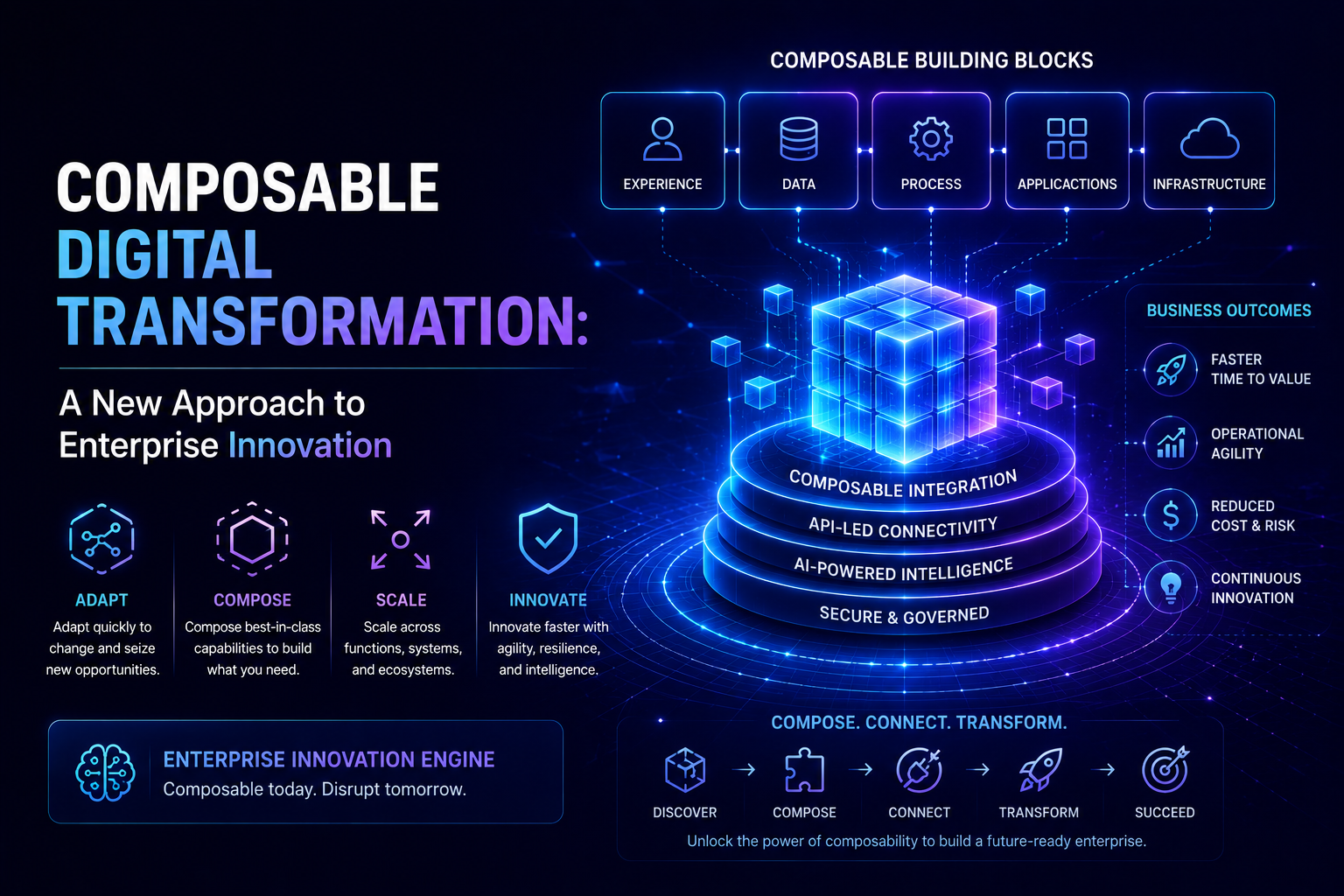
In 2026, leading enterprises are embracing Composable Digital Transformation—a modern approach that enables organizations to build flexible, scalable, and rapidly evolving digital ecosystems using modular technologies, APIs, cloud-native services, and reusable business capabilities.
Rather than replacing entire systems, composable transformation allows businesses to innovate incrementally while maximizing existing investments.
At APISDOR, we help enterprises adopt composable digital transformation strategies that accelerate innovation, improve agility, and create future-ready business platforms.
What Is Composable Digital Transformation?
Composable Digital Transformation is an approach in which organizations build digital capabilities using modular, reusable components that can be assembled, integrated, and adapted to business needs.
These components typically include:
- APIs
- Microservices
- Cloud-native applications
- Low-code platforms
- AI services
- Data platforms
- Workflow automation systems
Instead of developing large monolithic solutions, enterprises create flexible ecosystems composed of independent building blocks.
This approach enables faster adaptation to changing business requirements and market conditions.
Why Traditional Digital Transformation Often Falls Short
Many traditional transformation initiatives face challenges such as:
Complex Legacy Systems
Older applications often create:
- Integration challenges
- High maintenance costs
- Limited scalability
Slow Innovation Cycles
Large-scale modernization projects can take years before delivering measurable business value.
High Transformation Costs
Replacing entire systems often requires significant investment and operational disruption.
Limited Business Agility
Traditional architectures make it difficult to respond quickly to:
- Customer demands
- Market shifts
- Regulatory changes
- Emerging technologies
Composable approaches address these limitations through modular innovation.
Why Composable Transformation Matters in 2026
1. Faster Innovation
Composable architectures enable teams to:
- Reuse existing capabilities
- Build new services quickly
- Experiment with minimal risk
This significantly accelerates time-to-market.
2. Greater Business Agility
Organizations can:
- Launch new digital services rapidly
- Adapt workflows dynamically
- Scale capabilities independently
Agility becomes a competitive advantage.
3. Improved Technology Flexibility
Composable systems make it easier to:
- Adopt new technologies
- Integrate AI services
- Modernize incrementally
without disrupting core operations.
4. Better Return on Technology Investments
Rather than replacing existing systems, enterprises can:
- Extend functionality
- Integrate modern capabilities
- Maximize existing investments
This improves transformation ROI.
Core Principles of Composable Digital Transformation
Modular Business Capabilities
Business functions are separated into reusable modules.
Examples include:
- Customer management
- Payments
- Inventory
- Analytics
- Authentication
Each capability can evolve independently.
API-First Architecture
APIs enable seamless communication between:
- Applications
- Services
- Data platforms
- External partners
API-first design is the foundation of composability.
Cloud-Native Development
Cloud-native services provide:
- Scalability
- Reliability
- Flexibility
allowing enterprises to deploy and update capabilities independently.
Event-Driven Operations
Event-driven architectures support:
- Real-time responsiveness
- Dynamic workflows
- Scalable integrations
This improves operational efficiency.
Continuous Innovation
Composable systems support ongoing modernization rather than large, one-time transformation projects.
Key Technologies Enabling Composable Transformation
APIs and Integration Platforms
APIs connect digital capabilities across the organization.
Benefits include:
- Faster integration
- Reusable services
- Improved interoperability
Microservices Architecture
Microservices allow organizations to:
- Build modular applications
- Scale independently
- Accelerate deployments
Low-Code and Automation Platforms
Modern automation tools enable:
- Rapid workflow development
- Process optimization
- Citizen development initiatives
Artificial Intelligence and AI Agents
AI enhances composable ecosystems through:
- Intelligent decision-making
- Process automation
- Predictive analytics
Unified Data Platforms
Composable transformation relies on accessible, integrated data to power innovation and business intelligence.
Enterprise Use Cases
Customer Experience Modernization
Organizations can combine:
- CRM platforms
- AI recommendation engines
- Customer service systems
to create personalized experiences.
Intelligent Process Automation
Composable architectures support:
- Workflow automation
- AI-powered decision systems
- Cross-platform integrations
Digital Commerce Platforms
Retailers can compose:
- Payment services
- Inventory systems
- Recommendation engines
- Analytics tools
into scalable commerce ecosystems.
Enterprise Data and AI Platforms
Organizations can integrate:
- Data lakes
- Analytics tools
- AI models
- Automation workflows
to create intelligent business platforms.
Composable vs Traditional Transformation
| Traditional Transformation | Composable Transformation |
|---|---|
| Large-scale replacement projects | Incremental modernization |
| Long implementation timelines | Faster delivery cycles |
| Monolithic systems | Modular capabilities |
| Limited flexibility | High adaptability |
| Higher transformation risk | Lower risk through phased adoption |
Composable transformation enables organizations to innovate continuously rather than periodically.
Benefits of Composable Digital Transformation
| Benefit | Business Impact |
|---|---|
| Faster Innovation | Accelerated product and service delivery |
| Business Agility | Rapid adaptation to market changes |
| Scalability | Independent growth of capabilities |
| Cost Efficiency | Reduced modernization costs |
| Improved Customer Experience | Personalized and connected services |
| Future Readiness | Easier adoption of emerging technologies |
Common Challenges
Governance Complexity
As modular systems grow, organizations need:
- API governance
- Security standards
- Architectural consistency
Integration Management
Multiple services require robust integration strategies and monitoring.
Change Management
Teams must adapt to:
- New technologies
- Agile development practices
- Product-centric operating models
Security Considerations
Composable ecosystems require:
- Identity management
- API security
- Continuous monitoring
Best Practices for Successful Adoption
Start with Business Outcomes
Focus on solving high-value business problems first.
Build an API-First Foundation
APIs provide the flexibility required for composable innovation.
Modernize Incrementally
Avoid large-scale replacements whenever possible.
Invest in Governance
Establish standards for:
- Security
- Data management
- API lifecycle management
Embrace Automation and AI
Use intelligent automation to maximize the value of composable architectures.
How APISDOR Enables Composable Digital Transformation
At APISDOR, we help enterprises:
- Design composable enterprise architectures
- Build API-first ecosystems
- Implement cloud-native platforms
- Integrate AI and automation solutions
- Modernize legacy applications
- Establish governance and security frameworks
Our approach focuses on delivering measurable business outcomes while creating scalable and future-ready digital ecosystems.
FAQs: Composable Digital Transformation
Q1. What is composable digital transformation?
A: It is a strategy that uses modular, reusable technology components to build flexible and scalable digital ecosystems.
Q2. How is a composable transformation different from a traditional transformation?
A: Traditional transformation often involves replacing entire systems, while composable transformation focuses on incremental modernization using reusable components.
Q3. Why are APIs important in composable architectures?
A: APIs enable communication and integration between independent business capabilities and systems.
Q4. Can composable transformation work with legacy systems?
A: Yes. APIs and integration platforms allow organizations to modernize gradually without replacing all existing systems.
Q5. Which industries benefit most from composable transformation?
A: Financial services, healthcare, retail, manufacturing, logistics, and SaaS organizations are among the biggest adopters.
Conclusion
Composable Digital Transformation is redefining how enterprises innovate in 2026. By leveraging APIs, microservices, cloud-native technologies, AI, and automation, organizations can build flexible digital ecosystems that adapt quickly to changing business needs.
Rather than undertaking costly and disruptive transformation projects, enterprises can modernize incrementally, accelerate innovation, and maximize existing technology investments.
With APISDOR as your digital transformation partner, you can create composable enterprise platforms that support long-term growth, operational agility, and continuous innovation in an increasingly digital world.


