
Hybrid Web2 + Web3 Application Development Strategies
Introduction
The internet is undergoing a significant transformation. While Web2 continues to power today’s digital economy with cloud applications, social platforms, eCommerce, and SaaS solutions, Web3 introduces decentralized technologies that give users greater control over their data, digital assets, and online identities.
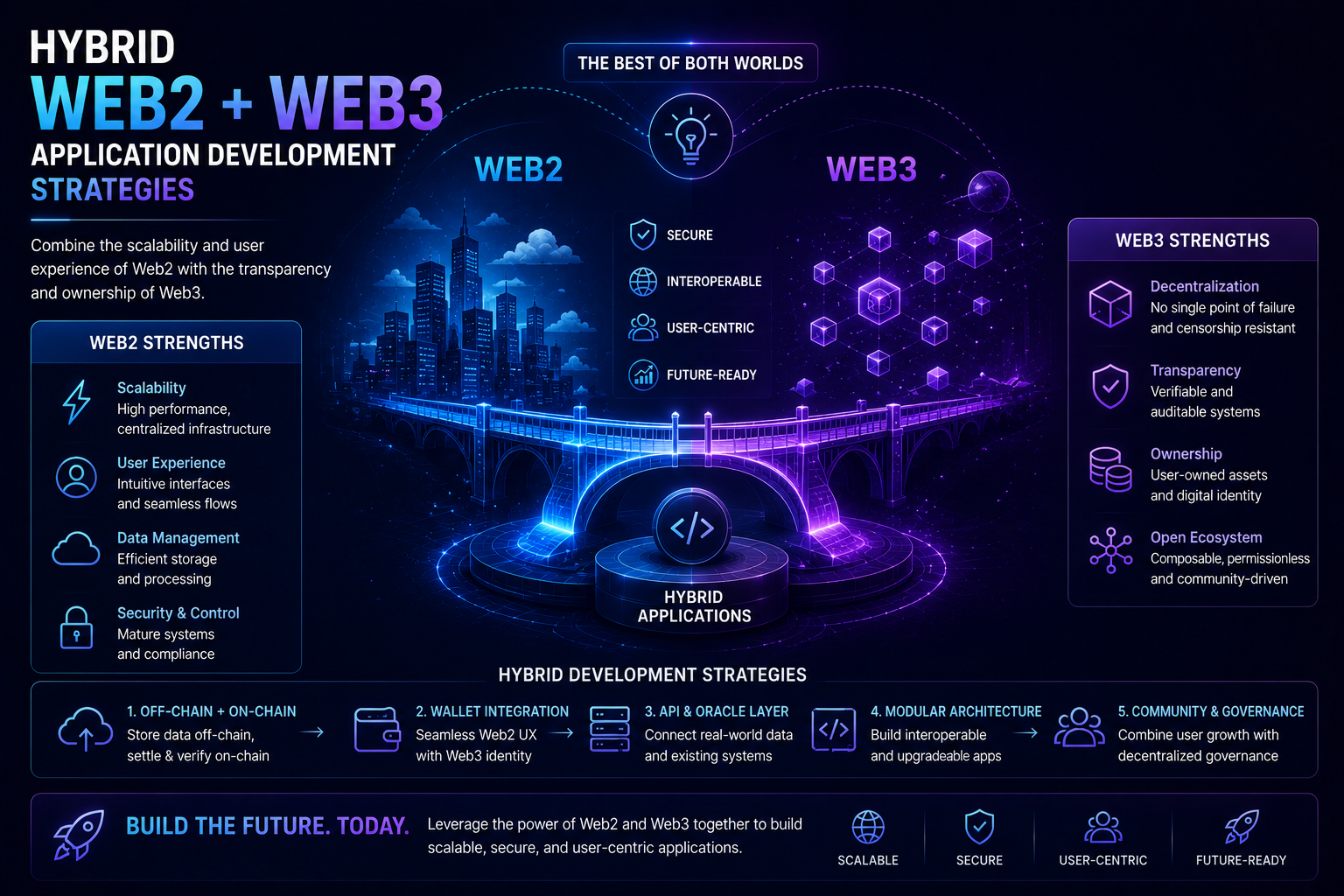
Rather than replacing Web2, many enterprises are adopting a hybrid Web2 + Web3 approach that combines the usability, scalability, and maturity of traditional applications with the transparency, security, and decentralization offered by blockchain technologies.
In 2026, hybrid application development is becoming the preferred strategy for organizations looking to innovate without abandoning their existing technology investments.
At APISDOR, we help enterprises design hybrid Web2 and Web3 solutions that deliver secure, scalable, and user-friendly digital experiences while preparing businesses for the future of decentralized technologies.
What Is a Hybrid Web2 + Web3 Application?
A hybrid Web2 + Web3 application combines traditional web technologies with decentralized blockchain capabilities.
These applications typically include:
- Cloud-hosted frontend applications
- REST and GraphQL APIs
- Microservices architecture
- Blockchain integration
- Smart contracts
- Digital wallets
- Decentralized identity (DID)
- Tokenized digital assets
Instead of moving every component onto a blockchain, organizations selectively decentralize features that benefit from transparency, ownership, and trust.
Why Enterprises Are Choosing Hybrid Architectures
1. Protect Existing Investments
Most organizations already have mature Web2 systems, including:
- CRM platforms
- ERP systems
- Customer portals
- Mobile applications
- Payment systems
Hybrid architectures allow businesses to enhance these systems with Web3 capabilities without rebuilding everything from scratch.
2. Better User Experience
Traditional Web2 applications offer:
- Fast performance
- Familiar user interfaces
- Easy onboarding
Web3 adds:
- Digital ownership
- Secure authentication
- Transparent transactions
Together, they create seamless and secure user experiences.
3. Stronger Security and Trust
Blockchain provides:
- Immutable transaction records
- Cryptographic security
- Transparent audit trails
This improves trust across digital ecosystems while allowing sensitive business logic to remain within secure cloud environments.
4. Future-Ready Digital Platforms
Hybrid applications allow organizations to gradually adopt emerging technologies while maintaining compatibility with existing business systems.
Web2 vs Web3: Understanding the Difference
| Web2 | Web3 |
|---|---|
| Centralized servers | Decentralized networks |
| Organization-controlled data | User-owned data |
| Username and password authentication | Wallet and decentralized identity authentication |
| Traditional databases | Blockchain ledgers |
| Cloud-based applications | Smart contract-driven applications |
Hybrid architectures leverage the strengths of both models.
Core Components of Hybrid Web2 + Web3 Applications
1. Cloud-Native Frontend
The user interface is typically built using modern web technologies such as:
- React
- Angular
- Vue.js
- Next.js
These frameworks deliver responsive, high-performance user experiences.
2. Backend APIs and Microservices
The backend manages:
- Business logic
- User management
- Notifications
- Analytics
- Enterprise integrations
APIs act as the bridge between Web2 services and blockchain networks.
3. Blockchain Layer
Blockchain manages:
- Digital assets
- Smart contracts
- Transaction verification
- Immutable records
Not all application data needs to be stored on-chain.
4. Smart Contracts
Smart contracts automate:
- Payments
- Ownership transfers
- Business agreements
- Token issuance
- Compliance workflows
They eliminate manual execution of predefined business rules.
5. Digital Wallet Integration
Wallets enable users to:
- Authenticate securely
- Sign blockchain transactions
- Manage digital assets
- Access decentralized services
Wallet-based authentication reduces reliance on traditional password systems.
6. Identity Management
Hybrid systems can combine:
- Traditional login methods
- Single Sign-On (SSO)
- Decentralized Identity (DID)
- Multi-factor authentication
This provides both convenience and enhanced security.
Enterprise Use Cases
Digital Asset Management
Organizations can tokenize:
- Certificates
- Loyalty points
- Digital collectibles
- Intellectual property
while continuing to use existing enterprise applications.
Supply Chain Transparency
Hybrid platforms combine:
- ERP systems
- Blockchain tracking
- IoT devices
to provide end-to-end product visibility.
Financial Services
Banks can integrate blockchain for:
- Cross-border payments
- Smart contracts
- Digital identity verification
while maintaining existing banking infrastructure.
Healthcare
Healthcare providers can:
- Secure patient consent using blockchain
- Manage records through cloud platforms
- Enable trusted data sharing between providers
- Customer Loyalty Programs
Businesses can create blockchain-based reward systems integrated with existing mobile apps and CRM platforms.
Benefits of Hybrid Web2 + Web3 Development
| Benefit | Business Impact |
|---|---|
| Faster Adoption | Incremental migration instead of complete replacement |
| Better User Experience | Familiar interfaces with decentralized capabilities |
| Enhanced Security | Blockchain-backed trust and transparency |
| Scalability | Cloud-native infrastructure supports enterprise growth |
| Flexibility | Combine centralized and decentralized services |
| Innovation | Introduce Web3 features without disrupting operations |
Common Challenges
Blockchain Complexity
Developers must manage:
- Smart contracts
- Wallet integration
- Blockchain transactions
- Network compatibility
Regulatory Compliance
Organizations should consider:
- Data privacy laws
- Digital asset regulations
- Financial compliance
- Identity verification requirements
User Adoption
Many users are unfamiliar with:
- Digital wallets
- Token management
- Blockchain transactions
Simple onboarding experiences are essential.
Integration with Legacy Systems
Successful hybrid architectures require seamless communication between blockchain networks and enterprise applications.
Best Practices for Building Hybrid Applications
- Keep Sensitive Business Data Off-Chain
Store confidential enterprise data in secure databases while using blockchain for verification, ownership, or transaction records where appropriate. - Build API-First Architectures
APIs simplify communication between Web2 systems and Web3 services. - Use Cloud-Native Infrastructure
Combine cloud scalability with blockchain capabilities for enterprise-grade performance. - Prioritize Security
Implement:- Secure wallet integration
- API authentication
- Encryption
- Identity management
- Smart contract audits
- Adopt Web3 Gradually
Start with high-value features such as:- Digital identity
- Smart contracts
- Asset tokenization
- Blockchain verification
before expanding across the organization.
How APISDOR Helps Build Hybrid Web2 + Web3 Platforms
At APISDOR, we help enterprises:
- Design hybrid Web2 + Web3 architectures
- Build API-first enterprise platforms
- Develop blockchain-integrated applications
- Implement secure wallet authentication
- Create smart contract solutions
- Modernize legacy applications with Web3 capabilities
- Ensure governance, security, and compliance
Our approach enables organizations to embrace decentralized technologies while maintaining the performance, scalability, and reliability of modern enterprise applications.
FAQs: Hybrid Web2 + Web3 Applications
Q1. What is a hybrid Web2 + Web3 application?
A: It combines traditional cloud-based applications with blockchain technologies such as smart contracts, digital wallets, and decentralized identity to deliver secure and scalable digital experiences.
Q2. Why shouldn’t enterprises move everything to Web3?
A: Many business processes benefit from the speed, scalability, and flexibility of Web2. A hybrid approach allows organizations to leverage blockchain where it adds the most value while preserving existing investments.
Q3. Is blockchain suitable for enterprise applications?
A: Yes. Enterprise blockchain solutions provide enhanced security, transparency, and automation for industries such as finance, healthcare, supply chain, and digital identity.
Q4. Can hybrid applications integrate with existing ERP and CRM systems?
A: Absolutely. APIs and middleware enable seamless integration between blockchain networks and enterprise platforms such as ERP, CRM, payment gateways, and cloud services.
Q5. Which industries benefit most from hybrid Web2 + Web3 development?
A: Financial services, healthcare, logistics, retail, manufacturing, gaming, digital identity, and SaaS businesses are among the leading adopters of hybrid architectures.
Conclusion
Hybrid Web2 + Web3 application development is emerging as the most practical path toward the next generation of digital innovation. By combining the reliability and scalability of cloud-native applications with the transparency, security, and decentralization of blockchain technology, enterprises can build flexible, future-ready platforms without disrupting existing operations.
Rather than viewing Web2 and Web3 as competing technologies, forward-thinking organizations are integrating the strengths of both to create secure, intelligent, and user-centric digital ecosystems.
With APISDOR as your technology partner, you can confidently develop hybrid Web2 + Web3 solutions that accelerate innovation, enhance trust, and position your business for long-term success in the evolving digital landscape.


