
How Enterprises Are Consolidating AI Systems for Better ROI

Introduction
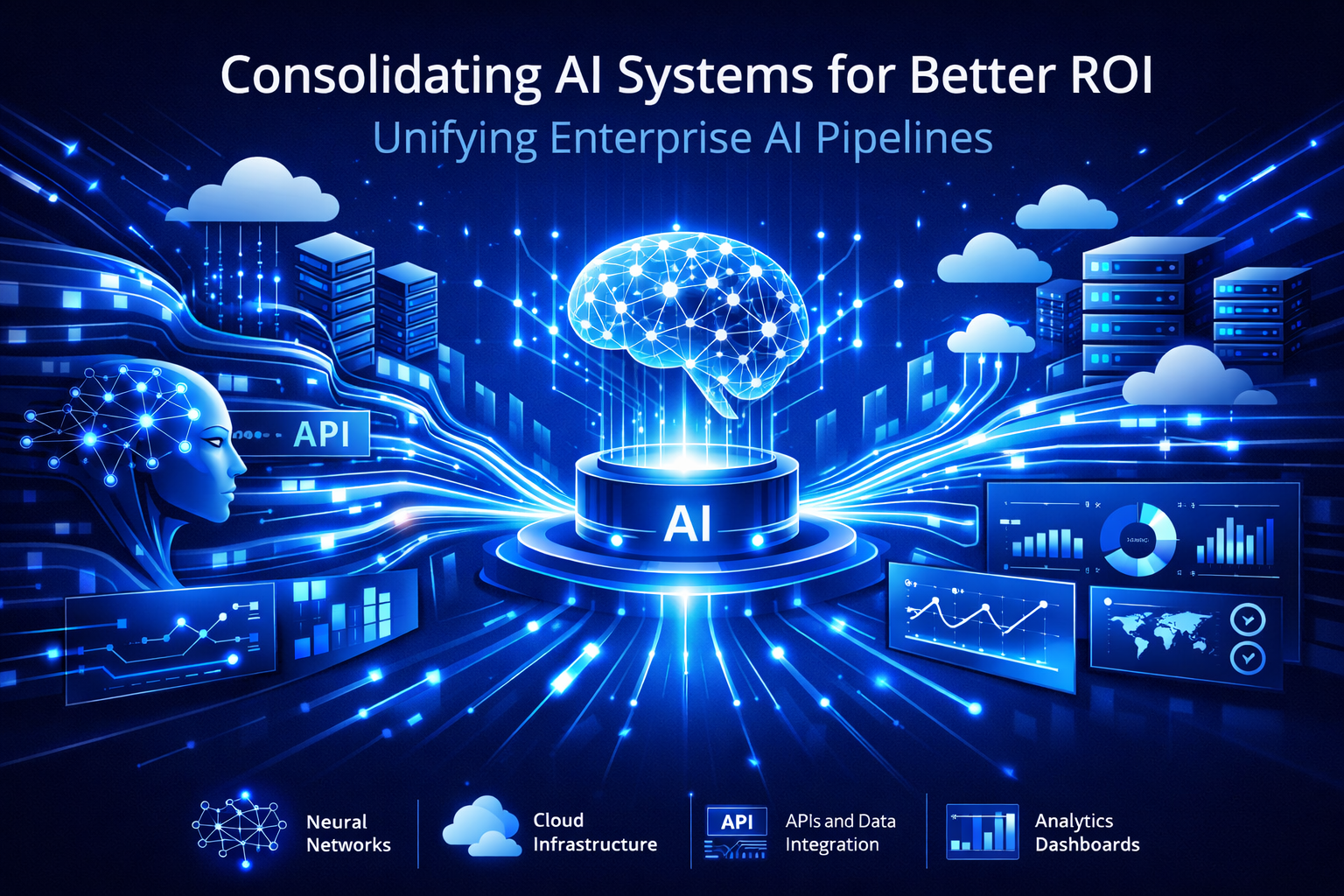
Artificial Intelligence adoption has accelerated rapidly across enterprises. However, many organizations now face a new challenge: AI sprawl.
Multiple AI tools, disconnected models, and fragmented data pipelines often lead to increased costs, inefficiencies, and limited business impact. In 2026, forward-thinking enterprises are shifting their focus from AI expansion to AI consolidation—bringing systems, models, and workflows into a unified, scalable framework.
At APISDOR, we help organizations streamline their AI ecosystems to maximize ROI, improve governance, and accelerate innovation.
What Is AI System Consolidation?
AI system consolidation involves:
- Unifying multiple AI tools and platforms
- Centralizing data pipelines and model management
- Integrating AI workflows across business functions
- Eliminating redundant tools and processes
The goal is to create a cohesive AI ecosystem that delivers consistent, measurable outcomes.
Why AI Consolidation Matters in 2026
1. Rising Costs of Fragmented AI Systems
Many enterprises face:
- Duplicate AI tools across departments
- High infrastructure and licensing costs
- Inefficient resource utilization
Consolidation reduces costs by eliminating redundancy and optimizing infrastructure.
2. Lack of Governance and Control
Disconnected AI systems create challenges in:
- Data governance
- Model transparency
- Compliance and auditing
A consolidated approach ensures centralized governance and accountability.
3. Inconsistent Business Outcomes
Without integration:
- AI insights remain siloed
- Decision-making becomes inconsistent
- Business value is limited
Consolidation aligns AI initiatives with enterprise-wide objectives.
Key Strategies for AI System Consolidation
1. Build a Unified AI Platform
Enterprises are adopting centralized platforms that support:
- Model development and deployment
- Data management and pipelines
- Integration with enterprise systems
- Monitoring and lifecycle management
This creates a single source of truth for AI operations.
2. Standardize Data and Integration Layers
AI systems depend on high-quality data.
Best practices include:
- Unified data lakes or data fabrics
- API-first integration strategies
- Real-time data pipelines
This ensures consistent and reliable inputs for AI models.
3. Consolidate AI Models and Tools
Instead of multiple disconnected tools, enterprises:
- Standardize on fewer platforms
- Reuse models across use cases
- Reduce duplication of efforts
This improves efficiency and reduces operational overhead.
4. Implement AI Governance Frameworks
Strong governance includes:
- Model versioning and monitoring
- Bias detection and mitigation
- Compliance with regulations
- Access control and auditing
Governance ensures AI systems remain trustworthy and secure.
5. Use Workflow Orchestration Platforms
Workflow orchestration tools (like low-code platforms) help:
- Connect AI systems with enterprise applications
- Automate data flows and decision processes
- Enable real-time execution of AI-driven workflows
This transforms AI into operational capabilities, not just isolated tools.
Benefits of AI Consolidation
| Business Area | Impact |
|---|---|
| Cost Efficiency | Reduced infrastructure and licensing costs |
| Operational Efficiency | Streamlined workflows and reduced redundancy |
| Governance | Centralized control and compliance |
| Scalability | Easier expansion of AI use cases |
| ROI | Measurable and consistent business outcomes |
Real-World Enterprise Use Cases
Unified Customer Intelligence: Consolidating AI systems across CRM, marketing, and analytics platforms creates a 360-degree customer view.
AI-Driven Operations: Centralized AI platforms enable predictive maintenance, process optimization, and real-time decision-making.
Financial Risk Management: Integrated AI models improve fraud detection, risk assessment, and compliance monitoring.
IT and DevOps Automation: AI systems combined with automation platforms enable self-healing infrastructure and intelligent monitoring.
Common Challenges in AI Consolidation
- Resistance to change across teams
- Legacy system integration complexity
- Data quality issues
- Skill gaps in AI and integration
A phased approach and strong leadership help overcome these challenges.
Best Practices for Successful AI Consolidation
- Start with a clear AI strategy aligned with business goals
- Identify redundant tools and eliminate duplication
- Invest in scalable data infrastructure
- Implement strong governance from the beginning
- Use integration and automation platforms to unify workflows
Strategic execution is key to maximizing ROI.
How APISDOR Helps Enterprises Achieve AI ROI
At APISDOR, we help organizations:
- Assess current AI maturity and tool landscape
- Design unified AI architectures
- Consolidate AI platforms and workflows
- Integrate AI with enterprise systems
- Ensure governance, security, and scalability
We focus on turning AI investments into measurable business outcomes.
FAQs: AI System Consolidation
Q1. What is AI sprawl?
A: AI sprawl refers to the uncontrolled growth of multiple AI tools and systems across an organization.
Q2. Does consolidation limit innovation?
A: No. It enables faster and more scalable innovation by reducing complexity.
Q3. How long does AI consolidation take?
A: It depends on the organization’s size and complexity, but many initiatives are implemented in phases over months.
Q4. Is consolidation expensive?
A: While there is an initial investment, it significantly reduces long-term costs.
Q5. What is the first step toward AI consolidation?
A: Conduct an audit of existing AI tools, models, and data pipelines.
Conclusion
As enterprises mature in their AI journey, the focus is shifting from experimentation to optimization and ROI. Consolidating AI systems enables organizations to reduce costs, improve governance, and unlock the full potential of their AI investments.
In 2026, success will not come from having more AI tools—but from having the right, unified AI strategy.
With APISDOR as your partner, enterprises can streamline AI ecosystems and transform them into powerful engines of growth, efficiency, and innovation.


