

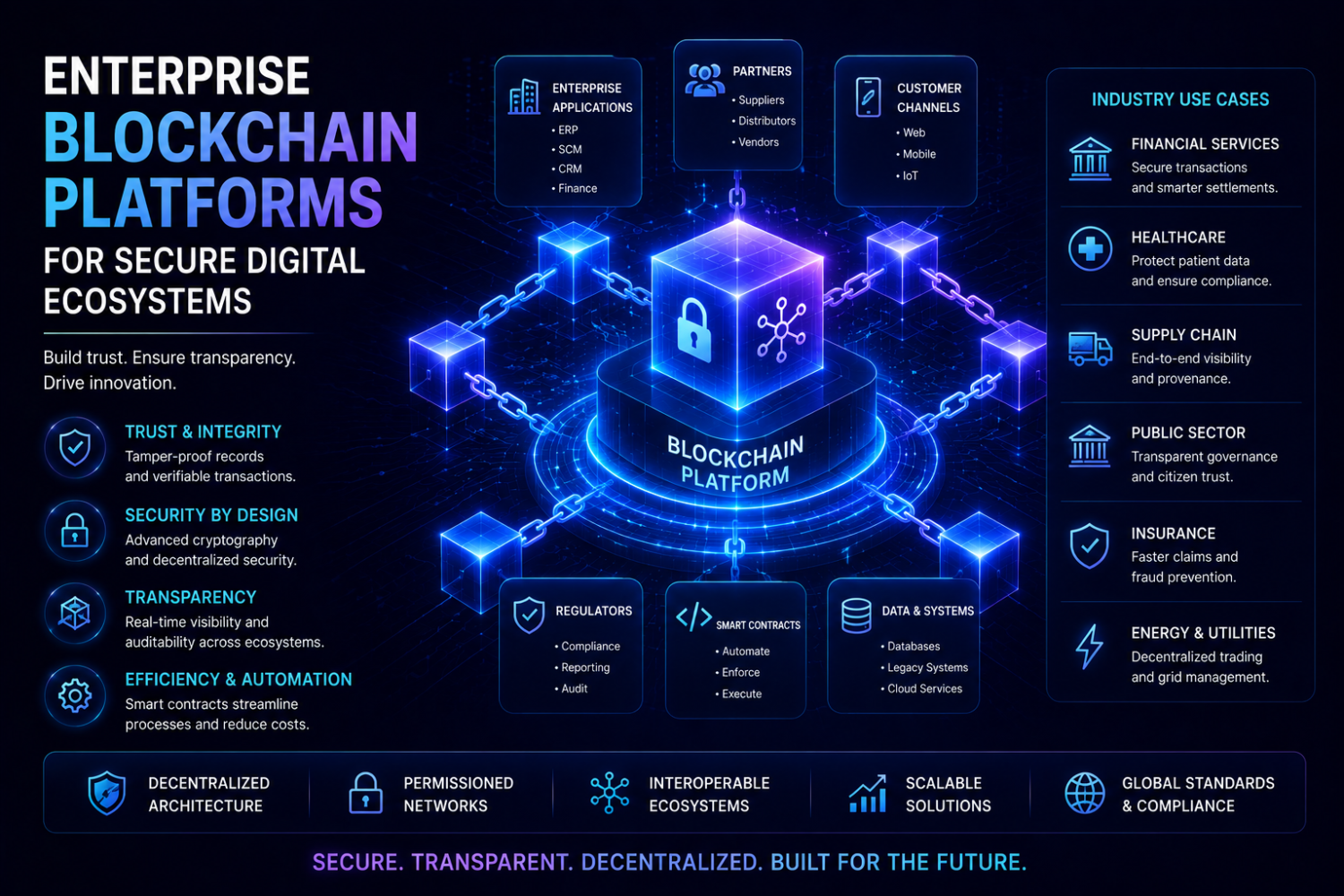
Enterprise Blockchain Platforms for Secure Digital Ecosystems
Introduction As organizations accelerate digital transformation, the need for secure, transparent, and trusted digital interactions has never been greater. Enterprises today operate across complex ecosystems involving customers, suppliers, partners, regulators, and cloud-based applications. Managing trust and ensuring data integrity across these interconnected environments is a growing challenge. This is where Enterprise Blockchain Platforms are creating […]
Read More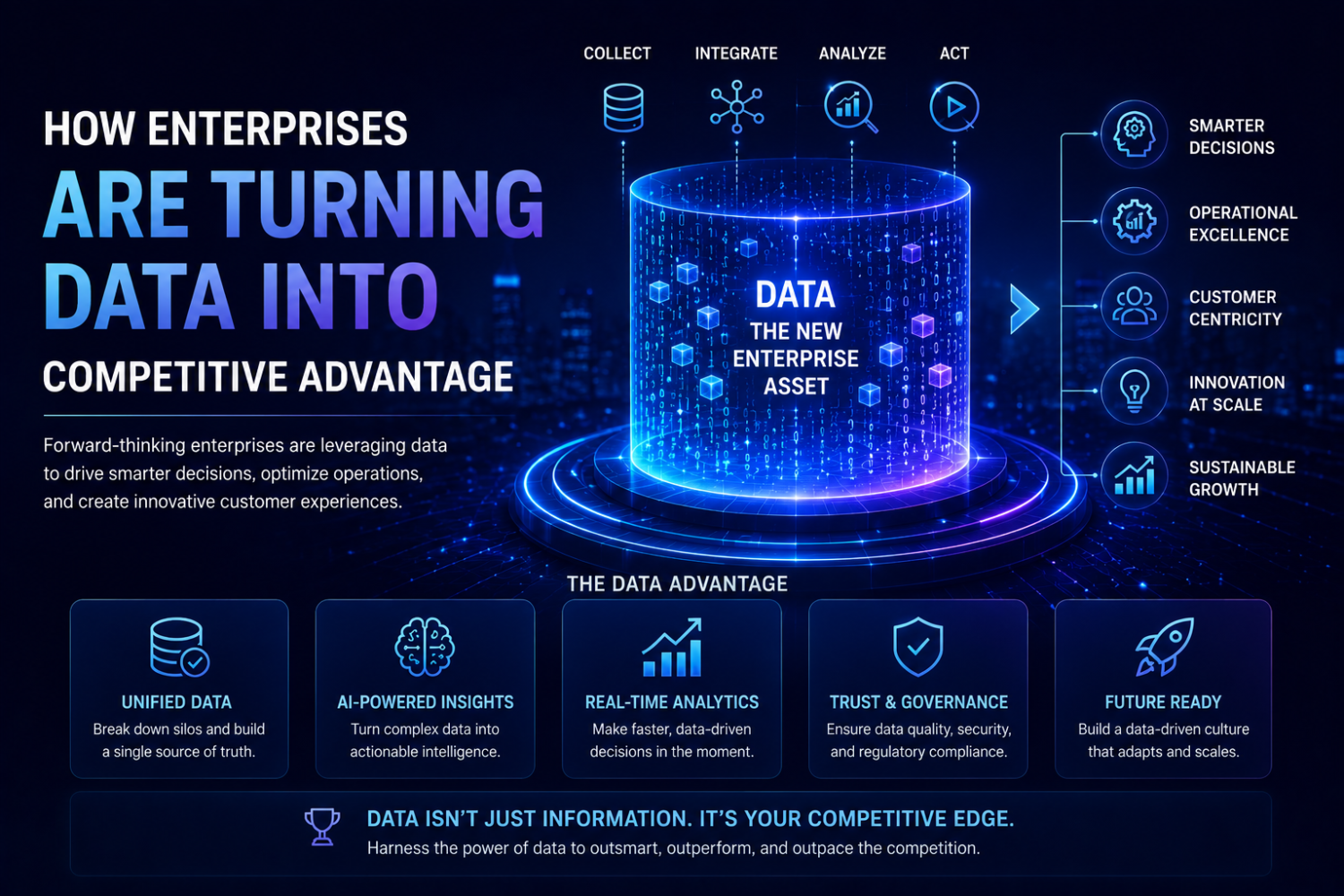
How Enterprises Are Turning Data Into Competitive Advantage
Introduction In today’s digital economy, data is one of the most valuable business assets. Every customer interaction, transaction, operational process, and digital touchpoint generates information that can reveal opportunities, predict trends, and drive smarter decisions. However, simply collecting data is no longer enough. The organizations leading their industries in 2026 are those that have learned […]
Read More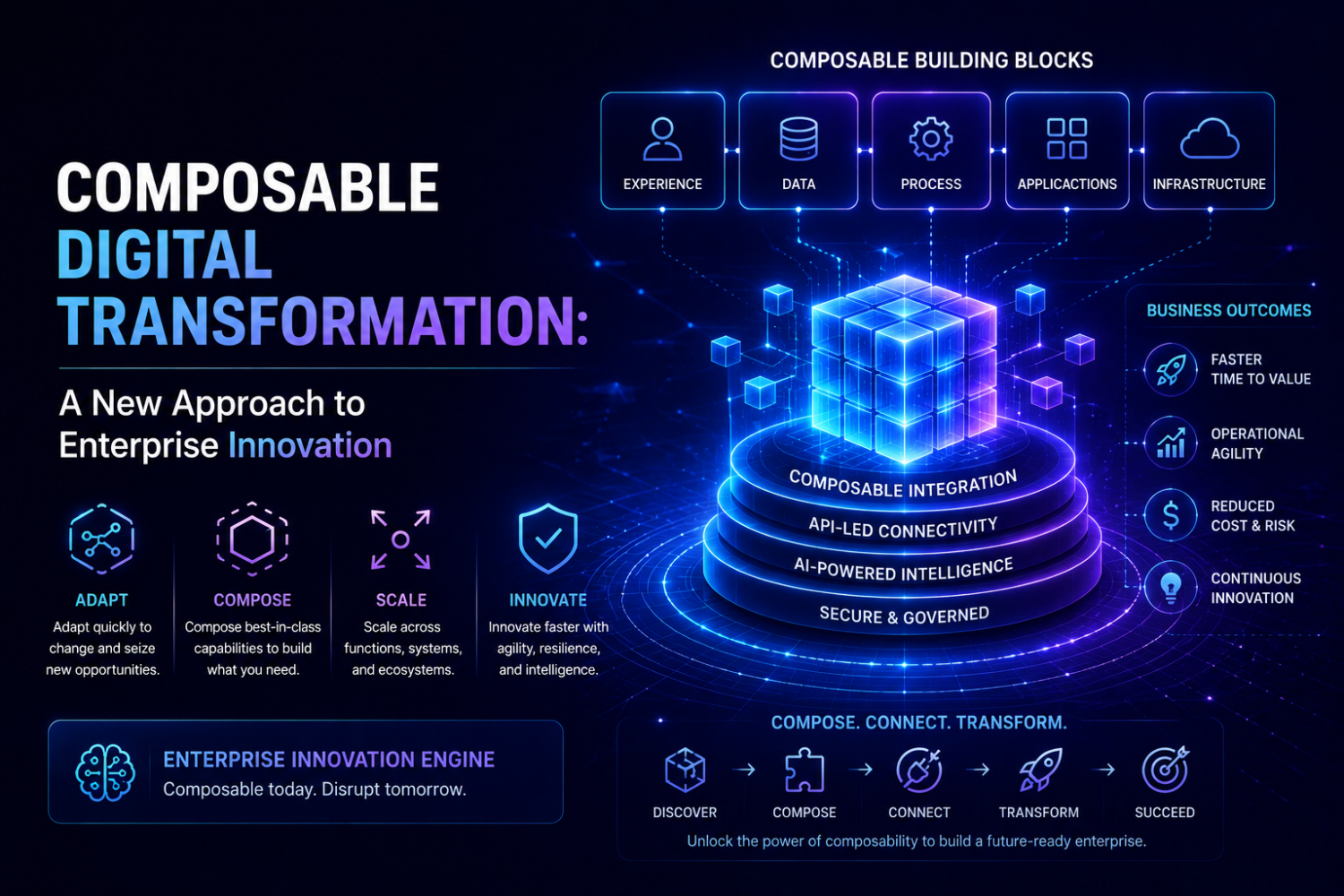
Composable Digital Transformation: A New Approach to Enterprise Innovation
Introduction Digital transformation has become a strategic necessity for enterprises seeking to remain competitive in an increasingly technology-driven world. However, many organizations still struggle with rigid legacy systems, lengthy development cycles, and disconnected technology ecosystems that slow innovation. In 2026, leading enterprises are embracing Composable Digital Transformation—a modern approach that enables organizations to build flexible, […]
Read More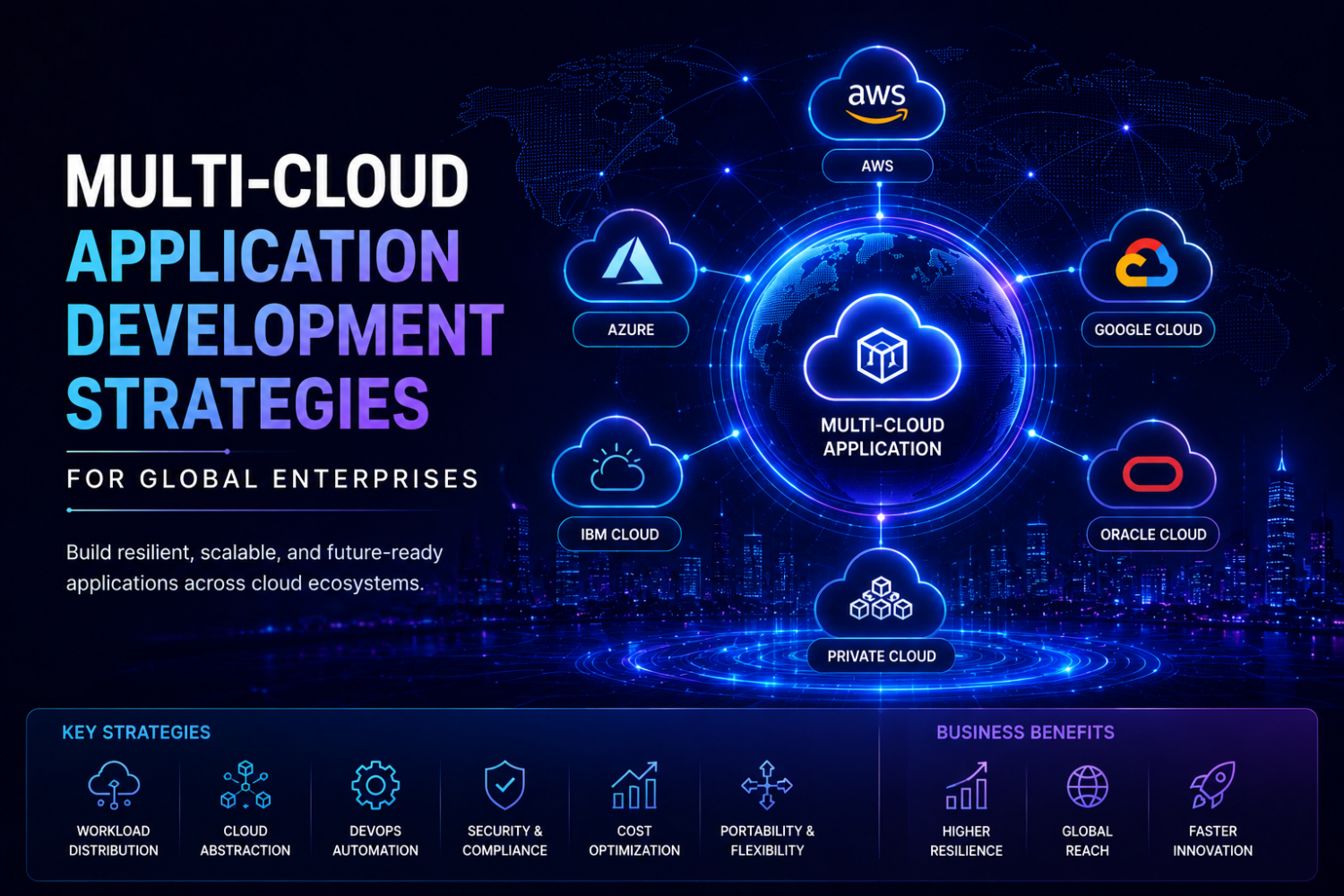
Multi-Cloud Application Development Strategies for Global Enterprises
Introduction As businesses expand across regions and markets, relying on a single cloud provider is becoming increasingly limiting. Global enterprises need infrastructure that can support diverse regulatory requirements, ensure business continuity, optimize performance, and avoid vendor lock-in. This is why multi-cloud application development has emerged as a strategic priority in 2026. By leveraging multiple cloud […]
Read More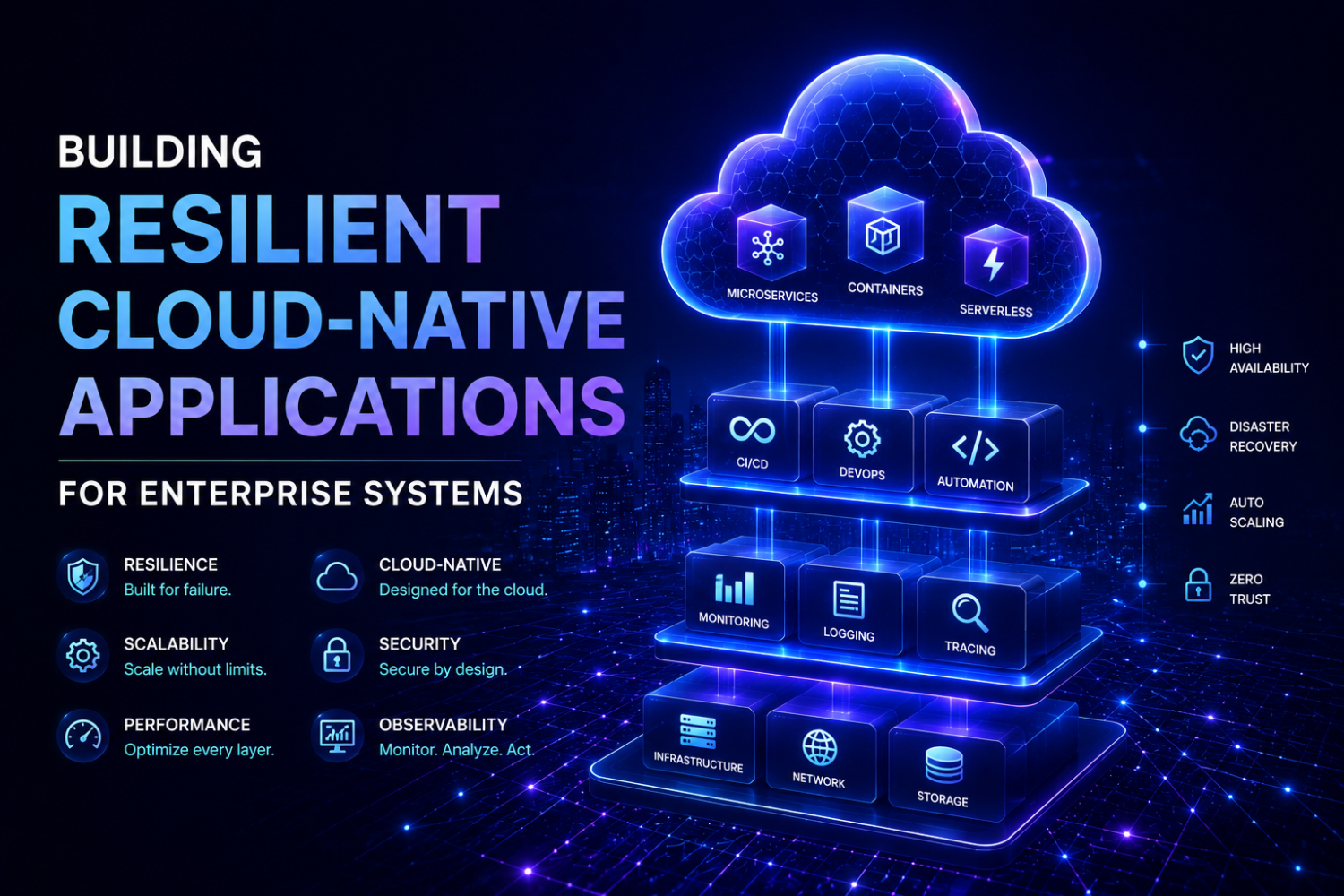
Building Resilient Cloud-Native Applications for Enterprise Systems
Introduction As enterprises accelerate digital transformation initiatives, application resilience has become a business-critical requirement. Modern organizations operate in highly distributed environments where downtime, service disruptions, and performance bottlenecks can directly impact revenue, customer experience, and operational efficiency. Traditional application architectures often struggle to meet the demands of today’s dynamic digital landscape. This is why enterprises […]
Read More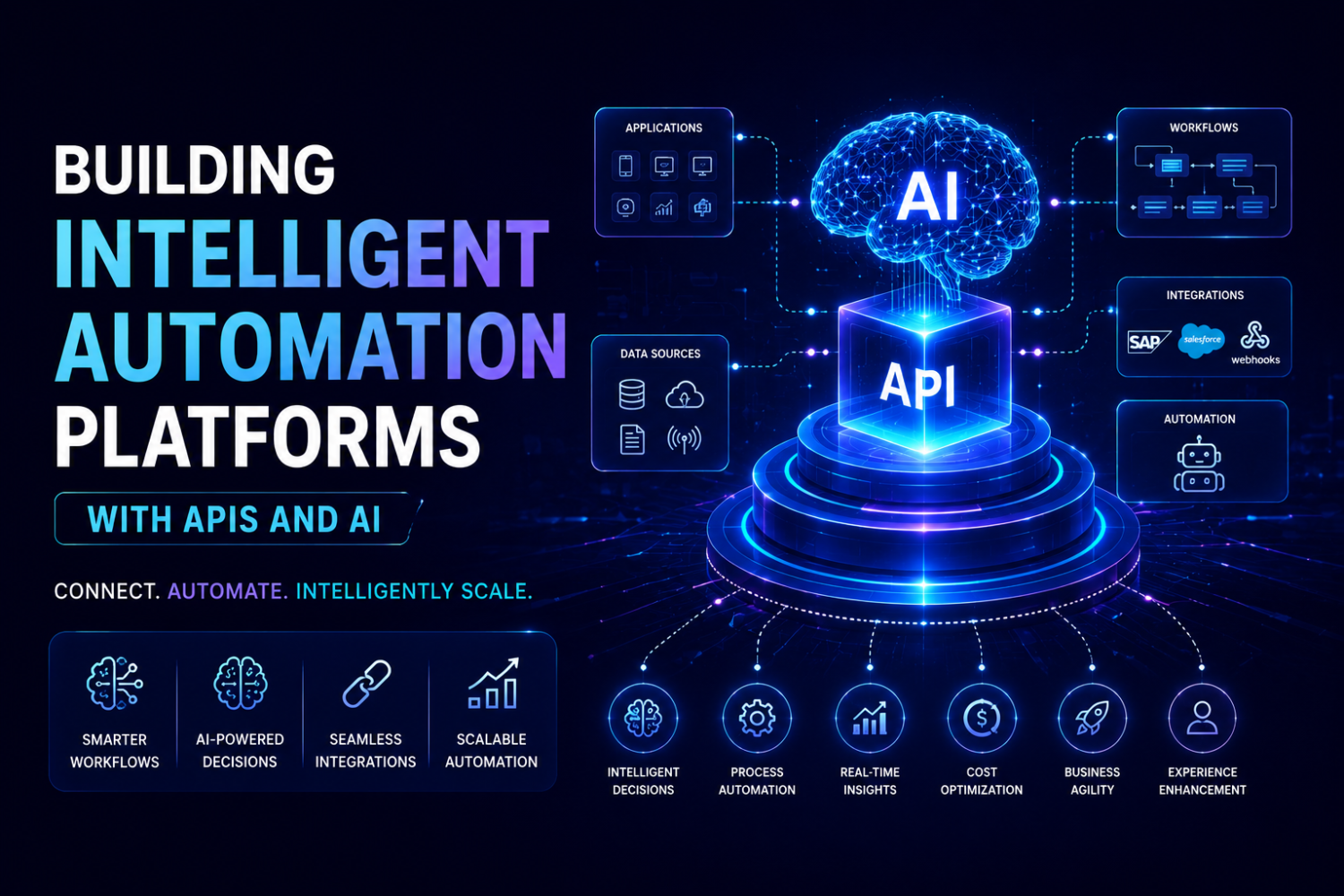
Building Intelligent Automation Platforms With APIs and AI
Introduction Automation is no longer just about eliminating repetitive tasks. In 2026, enterprises are building intelligent automation platforms that combine Artificial Intelligence (AI), APIs, workflow orchestration, and real-time data processing to create smarter, more adaptive business operations. These platforms go beyond traditional automation by enabling systems to analyze data, make decisions, trigger actions, and continuously […]
Read MoreFollow Us


